Ingenico and RETHINK Retail bring this intelligence to the world’s most consequential retail leaders, where peer-level insight, honest conversation, and practitioner-driven research meet to define what comes next in retail performance.
Checkout has improved. But it is still where revenue is lost.
Many retailers have already upgraded their systems to something better and faster. But there continues to be friction at the point of purchase, which affects conversion rates, capacity, and customer experience daily.
The difference between an effective checkout experience that keeps customers loyal and a poorly designed process that loses them during the last step is both tangible and measurable, and will become even more significant in 2026.
RETHINK Retail, in collaboration with Ingenico, aims to address this problem by focusing on it at its upcoming exclusive webinar titled Where Checkout Still Breaks and How Retailers Are Fixing It. This event is much more than an exploration of surface-level innovations; it is about discovering where the process breaks down, what retailers are getting right, and how new technology is revolutionizing checkout and making it a valuable business asset.
Registrants also unlock a free copy of The Checkout Performance Gap, a research report that quantifies exactly where and how retailers are losing revenue at the point of sale and what the leaders are doing to close it.
The Cost of Checkout Friction Is Not a Rounding Error
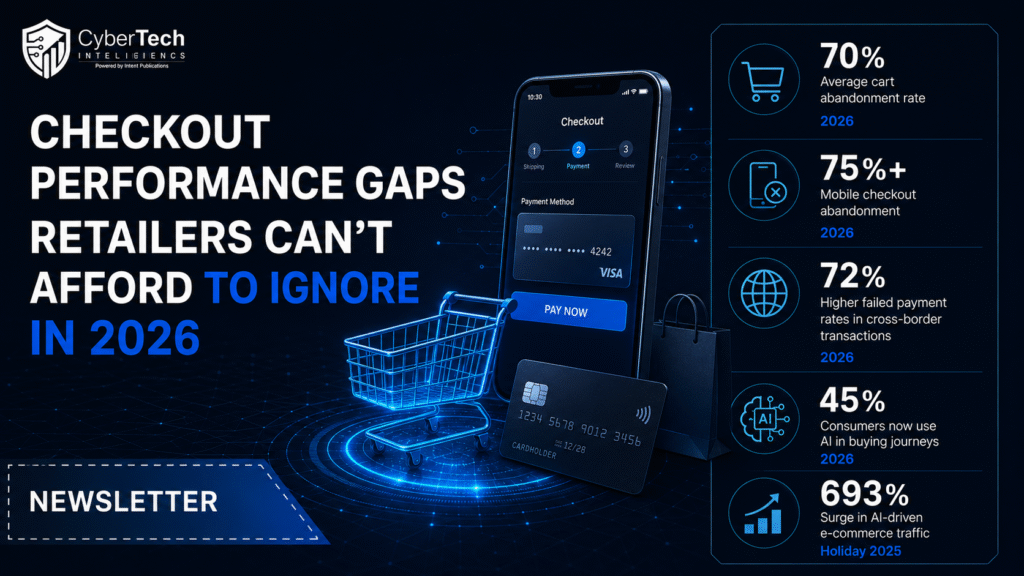
The average cart abandonment rate across retail is 70%, rising to more than 75% on mobile devices, with checkout friction identified as a primary driver of lost sales at the moment of highest purchase intent.¹
For retailers operating at scale, those percentages are not engagement metrics. They are direct revenue losses occurring thousands of times a day across every channel.
Cross-border is where the problem compounds fastest. 72% of merchants report higher rates of failed payments for overseas transactions compared to domestic ones, driving customers away at exactly the moment they have committed to purchase. ¹
Meanwhile, 94% of cross-border shoppers expect to pay in their local currency, and 99% want to use their preferred payment method.¹
Miss either expectation, and the transaction is gone. There is no recovery moment in a purchase that never completes.
IBM’s retail customer experience research is equally direct: 54% of retail executives report persistent data integration challenges across channels and systems ², and technology that powers self-checkout and payment systems can fail or quickly deteriorate, risking both the customer relationship and the transaction. ³
IBM’s IBV research identifies eliminating multisite friction as a direct driver of increased conversion rates, average order value, and cross-sell performance. ⁴ These are not experience metrics. They are P&L metrics.
KEY FIGURES AT A GLANCE
70% average cart abandonment rate, rising to 75%+ on mobile devices (Retail Technology Innovation Hub — April 2026) ¹
45% of consumers now use AI during their buying journeys, arriving at checkout with sharper intent and lower tolerance for friction (IBM / NRF Global Study — January 2026) ²
693% surge in AI-driven ecommerce traffic during the 2025 holiday season (Microsoft / Adobe via news.microsoft.com — January 2026) ⁵
$113 billion projected retail technology budget in 2026, with the C-suite mandate now focused squarely on proven ROI (Microsoft Cloud Blog — May 2026) ⁶
Ingenico: Rethinking Checkout as a Revenue Architecture Decision
Ingenico’s partnership with RETHINK Retail for this webinar reflects a conviction that has defined Ingenico’s platform direction: checkout is not a transaction endpoint. It is the most consequential moment in the entire retail journey, where every investment in marketing, merchandising, and customer experience either converts or collapses.
Closing the checkout performance gap is not a patching exercise. They are making a fundamentally different kind of decision, treating checkout as a revenue system, built from the payment layer up to convert more customers, handle more payment types, and generate data that tells you where the next point of loss is.
Ingenico’s platform is built for exactly this model. Across physical and digital channels, Ingenico connects payment capability to operational performance, giving retailers the ability to meet customers at their preferred payment method, remove the delays that kill transactions, and track exactly where checkout is losing revenue across every channel. Retailers on Ingenico’s platform are not just processing payments more reliably. They are building checkout into a measurable competitive advantage.
Practitioners and platform leaders who have built this in live retail environments make that architecture concrete in the webinar. Sharing what the metrics look like, what operational decisions were required, and what the retailers getting this right did differently from those still absorbing avoidable revenue loss at the point of sale.
Microsoft: The Checkout Moment Is Where Intent Converts, and Where It Walks Away
Microsoft’s January 2026 NRF announcement frames the checkout performance challenge with precision that every retail technology leader should carry into their next platform review.
At the centre of Microsoft’s retail AI launch was Copilot Checkout, designed around a single insight: connecting authentic brand engagement with frictionless checkout helps retailers capture value at the exact moment of intent. ⁵ The product eliminates redirect friction, turning the checkout moment from a conversion risk into a conversion guarantee.
Microsoft’s May 2026 Forrester TEI study provides the performance evidence: retailers that unify their commerce and operations intelligence are generating 124% to 282% ROI over three years, with store operations and commerce improvements delivering measurable P&L impact.⁶
Capturing those returns required a specific decision: treating checkout modernization as part of a unified commerce platform, not an isolated payment upgrade.
IBM: The Consumer Arriving at Checkout Has Already Made a Decision. Friction Reverses It.
IBM’s January 2026 global study with the National Retail Federation surfaces a finding that fundamentally reframes the stakes of checkout friction. 72% of consumers still shop in stores, and 45% use AI to support their buying journey ², arriving at the point of purchase with sharper intent, more product knowledge, and lower patience for a checkout experience that does not match the quality of the journey that preceded it.
IBM’s IBV data connects checkout friction directly to conversion rate, average order value, and cross-sell performance, three P&L lines, not one experience metric. Its agentic commerce research adds a sharper edge: for AI-assisted shoppers, checkout is not the last step of a transaction. It is the final trust test of a retailer. ⁷ ⁴
The wrong payment method is available. Friction at confirmation. No sign of the personalization the shopper experienced earlier in the journey. Any one of these turns a completed purchase into a lost one. IBM describes the use of AI to scale relevance and remove friction as a defining competitive advantage for 2026. ²
Palo Alto Networks: The Checkout System Is a High-Value Target
For the retail technology and security leaders in RETHINK Retail’s community, the checkout performance conversation has a security dimension that cannot be separated from the operational one. Point of sale and payment systems are among the most consistently targeted infrastructure in retail cybersecurity, and the 2026 threat data makes the risk quantifiable.
84% of major cyber incidents investigated by Unit 42 in 2025 produced operational downtime, reputational damage, or financial loss. For a retailer hit mid-trading day, a compromised checkout system is not an IT incident with a help desk ticket. Every customer in every queue at that moment is a lost transaction and a broken trust event simultaneously. ⁸
Palo Alto Networks’ State of Cloud Security Report 2025 (December 2025) found that 99% of organizations experienced at least one attack on their AI systems in the past year ⁹, with API interfaces, the same interfaces that modern checkout platforms rely on to connect payment, loyalty, and commerce data in real time, identified as the fastest-growing attack surface in enterprise environments. As checkout platforms modernise and expand their integration surface to deliver the flexibility and performance retailers need, security architecture must scale with them.
Building payment security and checkout performance from the same platform is not a design preference. In 2026, it is the baseline requirement because the threat environment is already targeting the seam between them.
Cisco: Network for the Checkout Experience Must Not Be an Afterthought
Every checkout today, POS, kiosk, mPOS, or online cart, runs on the network, which will enable such transactions to be carried out seamlessly, securely, and without any delay that would be felt by the customer as friction.
A survey conducted by Cisco in its 2026 State of Wireless report involving 6,098 wireless decision-makers in 30 countries showed that 54% of retailers had experienced revenue loss through wireless breaches, with almost 45% of these losses being valued at above $1 million annually.¹⁰
When the network carrying a checkout process fails or gets breached, the entire process itself falls apart.
63% higher wireless ROI and 84% reporting improved operational efficiency, both from treating network infrastructure as a strategic investment rather than a utility. For checkout specifically, the network decision carries the same weight as the payment platform decision. One failing makes the other irrelevant. ¹¹ ¹²
Ingenico’s platform is designed to operate on exactly this kind of resilient, security-first network foundation.
What the Webinar Delivers
Most retailers already know checkout is broken in places. What they do not always know is which places are costing the most, what the retailers are fixing it actually changed, and whether their current platform can support the fix without expanding their security exposure in the process. That is the specific ground this webinar covers, not a vendor pitch, not a trend overview. A practitioner-level conversation about where checkout revenue is leaving and what it takes to stop it. Registrants also leave with the Checkout Performance Gap report, which puts numbers on exactly that question.
Registrants receive free access to The Checkout Performance Gap report on registration.
Register Now: Where Checkout Still Breaks and How Retailers Are Fixing It Presented on behalf of Ingenico | Hosted by RETHINK Retail
Register Here
References
- Retail Technology Innovation Hub — The Hidden Cost of Checkout Friction — 20 April 2026
- IBM Newsroom / NRF — Brands and Retailers Navigate a New Reality as AI Shapes Consumer Decisions Before Shopping Begins — 7 January 2026
- IBM — Retail Customer Experience — November 2025
- IBM Institute for Business Value — Agentic Commerce Research — May 2025
- Microsoft — Microsoft Propels Retail Forward with Agentic AI Capabilities — 8 January 2026
- Microsoft Cloud Blog — Agentic AI Is Reshaping Retail and Consumer Goods Economics — 21 May 2026
- IBM — What Is Agentic Commerce? — 23 January 2026
- Palo Alto Networks — 2026 Unit 42 Global Incident Response Report — 17 February 2026
- Palo Alto Networks Blog — Where Cloud Security Stands Today and Where AI Breaks It — December 2025
- Cisco Newsroom — Cisco Report: Strategic Wireless Investments Are Driving Higher ROI — 2 April 2026
- Cisco — State of Wireless Report 2026 — 2 April 2026
- Cisco — 5 Wireless Trends Retail IT Teams Can’t Ignore in 2026 — 15 April 2026
🔒 Login or Register to continue reading