

There is a specific kind of organizational blind spot that grows in direct proportion to how seriously a company takes risk management.
The more rigorously an organization monitors risk, the more specialized its risk functions become. Cyber risk teams run their tools. ESG and reputational risk functions run theirs. Geopolitical analysts maintain their frameworks. Climate risk modeling sits in a separate corner of the finance or sustainability function. Supply chain teams track their own vendor exposure signals. Each group is doing serious, professional work. And none of them can see what the others see in any coherent, integrated way.
As organizations face increasingly fragmented risk environments across cyber, geopolitical, climate, and supply chain exposure, operational discipline and AI readiness are becoming central to enterprise resilience strategies. Businesses seeking to scale AI-driven risk intelligence are prioritizing structured data governance, integrated workflows, and operational visibility to support more reliable decision-making across complex supply chain ecosystems. Download the Supply Chain AI Readiness Report.
The result is a paradox that any Chief Risk Officer or investment committee member will recognize immediately: the organizations that invest most heavily in risk monitoring often have the least coherent view of their total risk exposure, precisely because that investment has been distributed across specialized functions that do not share a common framework, a common data model, or a common language for expressing what they know.
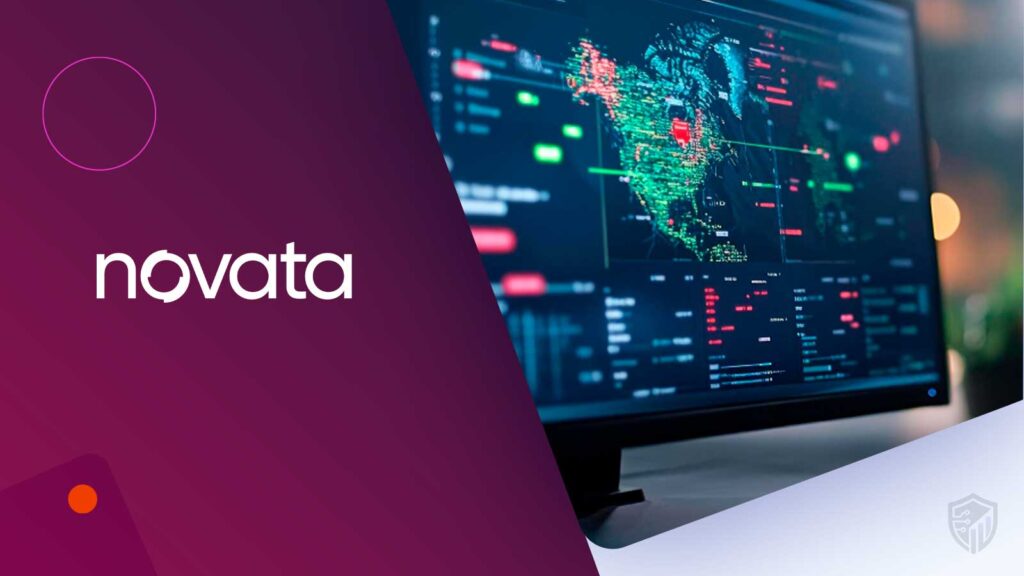
Novata just launched Risk Atlas to address that paradox directly. It is an AI-powered risk monitoring platform that normalizes diverse risk signals across five core categories into a single comparable view giving investors, portfolio managers, and corporate risk functions the integrated picture that fragmented specialist monitoring has never been able to produce.
The Supply Chain Risk Problem Has Outgrown Every Framework Designed to Address It
The third-party risk exposure that organizations carry through their supply chains has expanded beyond what any single risk management approach can reliably track.
A decade ago, supply chain risk management was primarily a procurement discipline. It focused on supplier concentration, delivery reliability, and cost exposure the operational dependencies that created business continuity risk if a key supplier failed or a logistics network broke down. Important work, but relatively tractable. The universe of suppliers worth monitoring closely was manageable. The risk categories that mattered were limited. The tools available were adequate for the scope of the problem.
That scope has changed fundamentally. The modern enterprise supply chain is a deeply interconnected network of dependencies that extends across geographies, regulatory environments, and risk categories that procurement teams were never designed to evaluate simultaneously. A supplier in a region experiencing geopolitical instability may simultaneously carry elevated cyber risk from state-sponsored threat actors, physical climate exposure from increasingly severe weather events, and reputational risk from labor practice scrutiny that is just beginning to surface in investigative journalism. Each of those risk dimensions is real. Each is tracked by a different specialist function using different tools and different frameworks. And none of them produce a combined view of the supplier’s total exposure profile.
Private equity firms managing portfolios of operating companies face the same structural problem at a different scale. Each portfolio company carries its own risk profile across the same five dimensions reputational, cyber, geopolitical, physical climate, and transition risk. Monitoring those dimensions separately, across a portfolio of twenty or fifty companies, through specialized teams using incompatible frameworks, is not a risk management program. It is an assurance deficit that compounds with every new portfolio addition.
The ISC2 2024 data on cyber risk alone illustrates the point. Cyber incidents affecting supply chain partners have become one of the primary attack vectors against large organizations not because the organization’s own defenses are inadequate but because the risk exposure of third parties flows directly into the organization’s own risk profile whether that exposure is monitored or not. Unmonitored supply chain risk is not lower risk. It is the same risk with less warning.
AI-Driven Risk Intelligence Is Changing What Continuous Monitoring Can Actually Mean
The gap between point-in-time risk assessment and genuine continuous monitoring has been one of the most persistent limitations in enterprise risk management and AI is finally making that gap closeable in practice rather than just in theory.
Traditional risk assessment is episodic by necessity. A due diligence process runs before capital deployment. An annual review evaluates portfolio company risk profiles. A periodic supplier audit generates a snapshot of third-party exposure. Each of these processes produces accurate information about the moment it was conducted. None of them tells you what is happening between assessments which is precisely when risk events tend to emerge.
Risk Atlas applies AI-enabled intelligence from specialized service providers to continuously surface, structure, and refresh risk signals across all five categories in real time. The distinction between surfacing and structuring is worth dwelling on, because it reflects the specific problem that AI solves in this context.
Surfacing risk signals identifying news events, regulatory filings, cybersecurity disclosures, climate data updates, and geopolitical developments that are relevant to a specific entity is a task that has traditionally required either significant human analyst capacity or expensive specialist data subscriptions covering each risk category separately. AI dramatically reduces the cost and increases the speed of that surfacing work, making continuous monitoring economically viable at portfolio scale in a way that human-powered monitoring never was.
Structuring those signals normalizing them into a comparable framework that allows an analyst to evaluate a reputational risk development alongside a cyber vulnerability disclosure alongside a physical climate exposure change for the same entity is the harder problem, and the one where Risk Atlas’s framework makes the most consequential contribution. Raw signals from different risk categories are expressed in different units, evaluated against different benchmarks, and interpreted through different professional frameworks. Making them comparable requires a normalization layer that translates diverse risk inputs into a common exposure language.
That normalization is what Meredith Binder, Novata’s Chief Product and Marketing Officer, identifies as the core value proposition: bringing consistency to how risk information is understood and used across portfolios and supply chains. Consistency is not a technical feature. It is an organizational capability the ability for different functions, different investment teams, and different levels of organizational hierarchy to look at the same risk picture and draw from the same framework rather than reconciling incompatible assessments generated by incompatible tools.
Christina Anslem, Novata’s Advisory Manager, frames the practical consequence directly: standardizing risk across portfolios and supply chains allows teams to identify where exposure is most critical, scale monitoring more efficiently, and focus resources where action is needed most. That resource focus is not a minor efficiency gain. In a risk management environment where analyst capacity is always finite and the universe of entities worth monitoring is always expanding, the ability to prioritize attention based on a normalized, comparable view of total exposure is the difference between risk management that is responsive and risk management that is perpetually catching up.
Risk Intelligence Is Becoming a Board-Level Governance Function
The third structural shift that Risk Atlas reflects is one that has been building gradually and is now accelerating: the elevation of risk intelligence from a specialist monitoring function to a board-level governance responsibility.
The regulatory and legal environment driving this shift is specific and consequential. SEC disclosure requirements for material cybersecurity incidents and cyber risk governance adopted in 2023 and now producing real enforcement consequences have made the quality of cyber risk monitoring a legal liability question rather than merely a best-practice consideration. EU supply chain due diligence legislation, including the Corporate Sustainability Due Diligence Directive, creates mandatory risk monitoring obligations across supply chains that operate within European regulatory reach. Climate-related financial disclosure frameworks, whether adopted voluntarily or mandated by specific jurisdictions, require organizations to demonstrate that physical climate and transition risk exposure is being assessed with genuine rigor rather than checkbox compliance.
Each of these regulatory developments has the same structural implication: boards and audit committees are now expected to demonstrate active oversight of risk categories that were previously delegated entirely to specialist functions operating below the governance visibility threshold. A board that cannot articulate the organization’s current exposure across reputational, cyber, geopolitical, physical climate, and transition risk dimensions or that relies on point-in-time assessments rather than continuous monitoring to inform that articulation is increasingly exposed to the governance failure narrative that regulators, shareholders, and litigation counsel have learned to construct around inadequate risk oversight.
Risk Atlas’s customizable risk thresholds and weighting capability reflects this governance evolution directly. Different boards, different investment committees, and different risk functions need to express risk tolerance and priority in ways that reflect their specific strategic context the geographic concentrations of their portfolio, the regulatory environments their portfolio companies operate within, the climate exposure profiles of their physical assets, the cyber risk architecture of their technology infrastructure. A platform that allows those thresholds and weightings to be configured to reflect actual organizational risk appetite rather than generic defaults produces risk intelligence that boards can engage with substantively rather than receive passively.
The full investment lifecycle coverage that Risk Atlas provides from pre-investment screening through ongoing portfolio oversight aligns with the governance expectation that risk management is a continuous function rather than a diligence-phase event. Flagging high-risk exposures before capital deployment matters. Tracking changes in risk profile over time through automated updates matters more, because the risk environment that exists at the moment of investment is not the risk environment that will exist two years later when conditions have shifted, new exposures have emerged, and the portfolio company’s own risk profile has evolved.
The Five Categories That Cover the Complete Exposure Landscape
Risk Atlas organizes its monitoring across five categories that together address the complete spectrum of material risk that modern organizations need to track. The selection reflects a deliberate mapping of the risk categories that regulatory frameworks, investor expectations, and board governance standards now treat as mandatory coverage rather than optional enhancement.
Reputational risk has become increasingly consequential and increasingly fast-moving as social media dynamics, investigative journalism, and activist investor pressure compress the timescales on which reputational damage develops and compounds. Continuous monitoring that surfaces emerging reputational signals before they reach mainstream visibility gives organizations the response window that post-event crisis management never provides.
Cyber risk monitoring at the portfolio and supply chain level addresses the third-party exposure problem that has made supply chain compromise the dominant attack vector in enterprise cyber incidents. An organization’s own cyber defenses are only as effective as the weakest link in the network of partners, vendors, and portfolio companies whose systems connect to its own.
Geopolitical risk has moved from a background consideration to a front-line business planning input as supply chain dependencies on specific geographies have become visible vulnerabilities rather than optimization achievements. The organizations that identified their exposure to specific geopolitical environments before those environments became crisis situations had response options that those who discovered the exposure after the fact did not.
Physical climate risk monitoring connects directly to the disclosure frameworks that institutional investors and regulatory bodies are now requiring organizations to apply with genuine analytical rigor. Exposure mapping that identifies where physical assets, supply chain nodes, and portfolio company operations overlap with high-risk climate scenarios is the foundation of credible climate risk governance.
Transition risk the exposure created by the regulatory, market, and technology changes associated with the shift to a lower-carbon economy rounds out the climate risk picture with the forward-looking dimension that physical risk monitoring alone cannot capture. Organizations whose business models, supply chains, or portfolio companies face material transition risk need that exposure surfaced and quantified alongside the physical climate risk picture to understand their complete climate-related exposure profile.
What Risk Atlas Means for the Organizations That Need It Most
The buyers for whom Risk Atlas creates the most immediate and significant value are not the organizations with the most sophisticated existing risk functions. They are the ones whose risk functions are most fragmented where the gap between what each specialist team knows and what the board and investment committee can see is widest.
Private equity firms managing portfolios of private companies face a specific version of this challenge. Private company risk data is less standardized, less publicly available, and harder to aggregate than public company data. The manual effort required to monitor risk across a portfolio of private companies through conventional means is significant enough that most firms accept monitoring gaps as an unavoidable reality of the asset class. Risk Atlas’s AI-enabled continuous monitoring changes that calculus by making portfolio-scale risk intelligence economically and operationally viable for private company portfolios rather than restricted to public company contexts where data availability makes automated monitoring more tractable.
Corporate risk and compliance functions managing extended supply chains face the same structural problem. The supplier base that needs to be monitored for material risk exposure is large and growing. The specialist capacity available to monitor it is finite and expensive. AI-driven normalization that makes it possible to prioritize monitoring attention based on a comparable total exposure score rather than managing separate monitoring programs for each risk category is a force multiplier for risk teams operating under the resource constraints that characterize most corporate risk functions.
The investment lifecycle framing that Risk Atlas adopts from pre-investment screening through continuous portfolio oversight reflects a mature understanding of how risk intelligence actually needs to function to be useful rather than decorative. Point-in-time diligence that is not connected to ongoing monitoring produces a risk picture that is accurate for exactly one moment and progressively less useful thereafter. Continuous monitoring that begins before investment and persists through the holding period produces the kind of risk intelligence that genuine governance oversight requires.
Research and Intelligence Sources: Novata
To participate in our interviews, please write to our CyberTech Media Room at info@intentamplify.com
🔒 Login or Register to continue reading









