
In recent years, technology has witnessed rapid innovation with enhanced capability, making life easy and business smooth. However, this advancement has also given rise to cyber threats associated with these innovations, leading to endpoint devices being vulnerable to cyber threats. As cyber threats become increasingly sophisticated and pervasive, Endpoint Detection and Response (EDR) has emerged as a fundamental component of cybersecurity strategies. The importance of EDR in modern cybersecurity strategies cannot be overstated. The rise of remote and hybrid working environments, backed by advanced cloud-based IT systems, has made a substantial contribution. to the rise in cyber threats to endpoint devices such as laptops, mobiles, computers, servers, etc.
EDR solutions provide continuous monitoring and analysis of endpoint devices and activities to detect and respond to threats in real time, enabling organizations to detect, investigate, and respond to potential threats in real time. EDRs help detect malicious activity and reduce risk before it becomes a critical security issue by utilizing automated response capabilities and powerful analytics. The integrity of enterprise systems and the protection of sensitive data depend on this anticipatory strategy.
Recommended: Cyber Insurance: Risks and Trends 2025
Overview—Endpoint Detection and Response (EDR)
EDR systems are indispensable to modern cybersecurity strategies. The technology is designed to identify, investigate, and address threats aimed at endpoint devices. Real-time endpoint activity monitoring and analysis is made possible by EDR systems, which allow organizations to respond swiftly to potential security issues. Many EDR solutions can improve overall threat detection and response capabilities by integrating with existing security technologies and Security Information and Event Management (SIEM) systems. EDR systems are essential for safeguarding organizations against ever-changing cyber threats. With its automatic responses, sophisticated threat detection, continuous monitoring, and comprehensive incident investigation capabilities, EDR offers a robust cybersecurity mechanism to organizations.
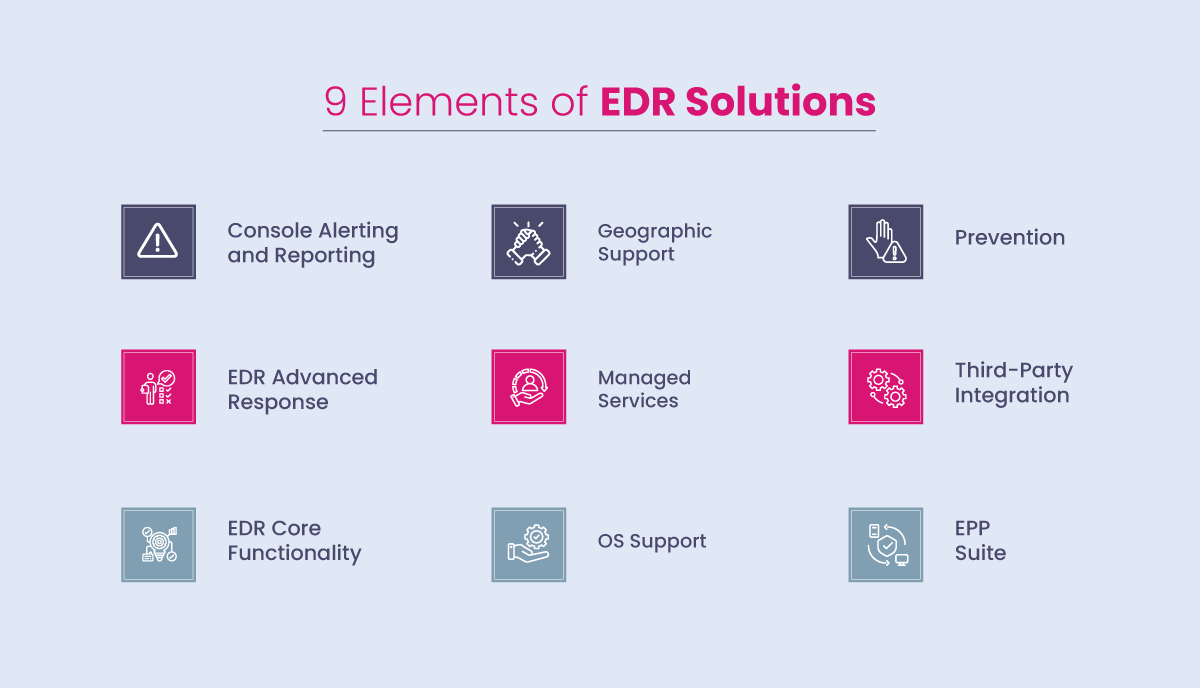
Key Functions of an EDR
1. Data Collection
EDR systems continuously collect a vast amount of information from endpoints, such as user activity, network traffic, file changes, and system logs. This continuous data gathering enables EDR to understand endpoint activity and identify irregularities that indicate security threats. Monitoring various parameters allows EDR to collect data that aids in threat analysis and ensures an effective cybersecurity solution.
2. Advanced Threat Detection
EDR system analyzes the gathered data to detect suspicious activity using sophisticated methods such as behavioral analysis and machine learning (ML). It can detect unknown threats using algorithms and anomaly detection techniques, as well as known threats utilizing signature-based detection. This two-pronged strategy enhances the identification of complex threats that might elude conventional security.
Recommended: Top AI Security Tools for Financial Services Industry
3. Real-time Monitoring and Visibility
EDR continuously monitors endpoints, including servers, laptops, desktop computers, and Internet of Things (IoT) devices, to spot unusual activity instantly and provide a comprehensive view of endpoint behavior. This continuous monitoring ensures that security personnel are well-informed about endpoint behavior, allowing them to quickly spot any anomalies or suspicious activity.
4. Rapid Incident Response
EDR systems can start automated responses when they identify a threat. Isolating the attacked endpoint from the network, terminating malicious processes, or restoring systems to their pre-attack configurations are a few possible remedies. This quick response capability is crucial for preventing threats from spreading and minimizing damage after an incident.
5. Investigation and Forensics
Forensic capabilities offered by EDR systems enable security teams to conduct in-depth investigations into security incidents. They provide information about the attack vector, chronology, and compromised systems—all of which are critical for understanding the nature of the threat and enhancing defenses in the future. Forensic capabilities offered by EDR systems enable security teams to conduct in-depth investigations into security incidents, which is crucial for post-event analysis and security protocol improvement.
6. Alerting and Reporting
When a threat is detected, EDR solutions initiate alerts and notifications that include comprehensive details about the threat’s characteristics and its consequences. These notifications can help security analysts prioritize high-risk events. Effective alerting systems enable security experts to respond promptly when there are significant threats.
7. Comprehensive Endpoint Visibility
Comprehensive visibility into every endpoint in an organization’s network is provided by EDR solutions. The ability to obtain comprehensive data about each device’s user behavior, network connections, processes, and apps helps security teams in identifying anomalous behavior activity.
8. Behavioral Analysis
EDR systems can identify deviations that can point to fraudulent activity by establishing a baseline of normal user behavior. This feature is crucial for identifying complex or subtle threats that conventional signature-based techniques could overlook.
In summary, EDR systems are essential for modern cybersecurity challenges, providing a proactive approach to threat management and detection. EDRs play a pivotal role in enhancing an organization’s cybersecurity posture by providing real-time visibility, facilitating proactive threat hunting, and integrating with other security tools.
Recommended: Cyber Threat Intelligence: How to Predict and Prevent Cyberattacks?
Importance of EDR in Cybersecurity
EDR systems are essential for modern cybersecurity challenges, providing a proactive approach to threat management and detection. EDRs play a pivotal role in enhancing an organization’s cybersecurity posture by providing real-time visibility, facilitating proactive threat hunting, and integrating with other security tools.
Here’s a breakdown of the importance of EDR in cybersecurity:
1. Continuous Monitoring and Visibility
EDR solutions offer real-time monitoring of endpoints, allowing security teams to maintain visibility over all devices connected to the network. This capability is essential for identifying and addressing threats that may bypass traditional perimeter defenses.
2. Rapid Threat Detection and Response
EDR systems utilize advanced analytics and behavioral analysis to detect anomalies and potential threats rapidly. This rapid detection enables organizations to respond promptly, reducing the risk of data breaches and other cyber incidents.
3. Automated Remediation
EDR solutions can automate responses to a cyberattack, including removing malicious modifications or isolating compromised devices. This automation reduces damage and recovery time to preserve business continuity.
4. Proactive Threat Hunting
EDR empowers security teams to proactively hunt for threats within the network rather than solely relying on reactive measures. This capability is vital for uncovering hidden threats that may not be detected by conventional security measures.
5. Enhanced Incident Investigation
EDRs facilitate in-depth investigation by providing insights into security occurrences, and they do so through their extensive logging and reporting tools. Organizations can enhance their defenses against future assaults and acquire a better understanding of how breaches happen thanks to this visibility.
6. Support for Remote Work Environments
EDRs are crucial for protecting endpoints that might not be as well protected as those in an office setting as remote work grows increasingly common. This protects the larger business network by ensuring that remote workers are protected from cyberattacks.
EDRs enhance an organization’s cybersecurity posture by integrating comprehensive investigation capabilities with real-time visibility and rapid incident response. Implementing an effective EDR solution is crucial for safeguarding sensitive data and preserving operational integrity as cyber threats continue to evolve. EDR solutions also stress the importance of endpoint security.
Recommended: Cybersecurity Simplified: What is Cloud Infrastructure Security?
Conclusion
EDR systems are integral to modern cybersecurity strategies, offering thorough endpoint monitoring and analysis that enhances threat detection and response. They strengthen cybersecurity strategies by addressing vulnerabilities, providing visibility, automating responses, and offering critical insights into security events. They offer useful insights that support bolstering an organization’s defenses against future attacks, in addition to assisting in the identification and response to threats.
Additionally, EDR’s automated response features enable prompt action against detected threats, reducing potential damage and ensuring business continuity. Integrating EDR with current security solutions further strengthens an organization’s defenses against evolving cyber threats. As reliance on remote work and mobile devices grows, robust EDR solutions will become increasingly important, highlighting their future significance in cybersecurity strategies. As cyber threats become more sophisticated and pervasive, their role is crucial. Implementing an effective EDR solution is a strategic advantage and a necessity for organizations aiming to protect their digital assets from an ever-evolving threat.
To share your insights, please write to us at news@intentamplify.com