Industrial Internet of Things or IIoT security is a key driver in the transition from traditional operations to smart factories, empowering businesses to grow and innovate. IIoT frameworks represent a transformative shift in how industries operate, leveraging connectivity to enhance productivity, efficiency, and data-driven decision-making. This advanced transformative shift is not only enhancing the growth but also expanding their market presence. Moreover, as companies embrace these advanced Operational Technologies (OT) or connectivity solutions in their operations, it limits operational costs and streamlines their processes effectively.
IIoT systems enable real-time monitoring and control of industrial processes by integrating advanced technologies such as big data analytics, machine-to-machine (M2M) communication, and automation. However, this increased connectivity also introduces significant cybersecurity challenges that must be addressed to protect critical infrastructure. Effective IIoT security is essential for safeguarding sensitive data and ensuring the reliability of industrial operations. It encompasses a range of practices and technologies designed to protect connected devices from unauthorized access, data breaches, and other cyber threats.
Here, we will explore the critical aspects of IIoT security, including overview, importance, data protection, emerging threats, key risks associated with IIoT, and common cyber risks. Moreover, this primer highlights the essential security strategies and best practices for securing industrial environments against the evolving landscape of cyber risks. Further, it outlines the importance of IIoT security and strategies for safeguarding industrial environments.
Recommended: Cybersecurity Simplified: What is Endpoint Protection in 2025?
Overview of IIoT Security
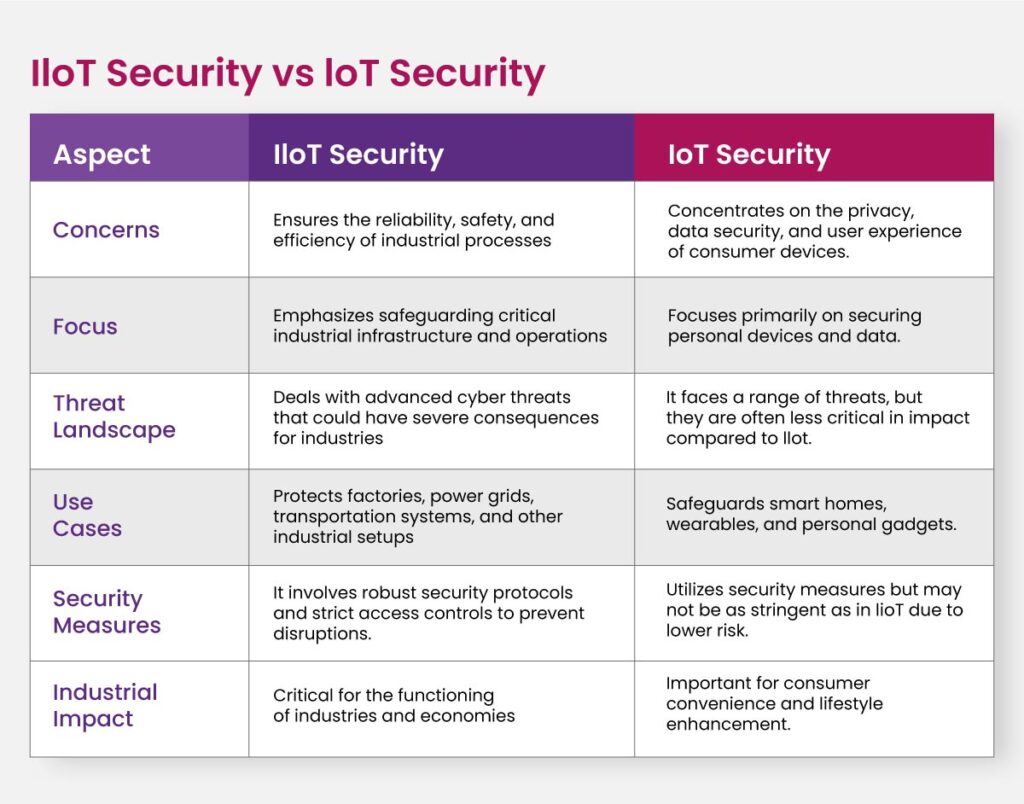
IIoT security plays a critical role in offering protection to the interconnected devices, networks, and data that drive modern industrial processes. Moreover, it acts as a barrier to protect the smart devices and equipment used in modern industries.
In an effort to enhance efficiency and automation, industries increasingly adopting IIoT security technologies in their modern industrial processes are also facing significant cybersecurity challenges. These cybersecurity challenges stress a better and improved cyber initiative to secure IIoT environments, such as improved governance including businesses, operational technology, and Information Technology (IT) alignment, improved IIoT visibility, extended network segmentation and vulnerability management capabilities, improved management of powerful IDs and vendors, and integrating IT and OT security and threat management programs and platforms.
Importance of IIoT Security
IIoT security is crucial for safeguarding OT and ensuring the availability, integrity, and confidentiality of industrial systems. IIoT systems consist of various devices, which are vulnerable to cyber threats. These devices include actuators, sensors, and control systems that communicate over the internet.
These advanced technologies are designed to improve organizations’ operational efficiency and enable machine-to-machine (M2M) communication; however, they also expose organizations to cyber threats. Security breaches in IIoT can result in severe consequences, such as operational disruptions, safety hazards, and financial losses.
Common Cyber Threats
As the evolution of connected devices advances, the cases of cyber threats are also advancing, making cyber security crucial for organizations. IIoT systems without strong security are vulnerable to attacks and data breaches, which lead to severe conciseness to organizations’ sensitive information and data such as device exploitation and ransomware. IIoT environments face numerous cyber threats, including:
- Man-in-the-Middle Attacks: These attacks happen when an adversary intercepts communications between two systems, which results in unauthorized control over industrial processes, leading to the exploitation of data and information by middle-man.
- Device Exploitation: Scammers and attackers can take control of devices without altering their functionality, potentially using them to launch further cyberattacks.
- Ransomware: In these attacks, IIoT systems are targeted by ransomware attacks, which are malware that encrypts data to hold a victim’s information for ransom.
Recommended: Cybersecurity Simplified: What is Cybersecurity in 2025?
Key Risks Associated with IIoT
As IoT threats are growing and becoming more sophisticated, IIoT systems are sensing an impact on modern industrial processes and efficiency. Malicious actors often target IIoT environments to take advantage of flaws in Industrial Control Systems (ICS), such as Supervisory Control and Data Acquisition (SCADA) and Programmable Logic Controllers (PLC). Operational disruptions, safety hazards, and financial losses are some common potential consequences of security breaches in the IIoT environment in case of a sophisticated cyberattack.
1. Legacy Systems Vulnerability
IIoT is not an old concept, which is why many IIoT devices were designed without security in mind, often lacking essential features such as authentication and encryption for a strong security measure. The lack of these features makes IIoT systems vulnerable to attacks such as malware infections, ransomware, phishing, and Denial of Service (DoS) attacks. Their long operational lifespans can increase this vulnerability, as they may run outdated software with known exploits.
2. Increased Attack Surface
The integration of OT with IT expands the attack surface significantly due to the interconnected nature of IIoT systems. These connections are prime targets of cybercriminals, allowing easy access to critical systems. Moreover, the risk of cyberattacks rises with devices communicating across both internal and external networks.
3. Complexity and Fragmentation
IIoT has gone through a significant advancement in industrial data exchange and automation; however, its implementation is filled with complexity and fragmentation. The variety of devices from different manufacturers complicates security management. Moreover, this can hinder interoperability and increase the risk of misconfigurations.
4. Diverse Protocols and Standards
The existence of multiple communication protocols can lead to significant compatibility challenges and technology fragmentation, complicating interoperability and security management. This inconsistency can disturb the effective monitoring and response strategies of IIoT systems. Moreover, if they rely on incompatible protocols, it results in inconsistency in information and data loss.
5. Convergence of IT and OT
The merger of IT and OT networks creates new vulnerabilities, as traditional IT security measures may not be suitable for protecting industrial environments. This interconnect expands the cyberattack surface area of IIoT systems, which results in a rise in cyber threats and processes of data that drive modern connected industrial processes.
Essential Security Strategies for IIoT
As cybersecurity technology advanced, the IIoT systems benefited, resulting in boosted productivity and enhanced service delivery in a variety of sectors such as healthcare and manufacturing. However, IIoT devices are also subject to cyber threats due to their interconnected nature and exposure to the internet. As cyber threats rise and organizations increasingly adopt IIoT systems, the requirement for a strong security strategy arises. To effectively mitigate risks associated with IIoT, organizations should implement a comprehensive security strategy with a multi-faceted approach that includes:
1. Security by Design
It is important to integrate security measures from the beginning, such as during the design phase. This includes embedding security features into the device design and ensuring all components meet stringent security standards. Implementing security measures during the design phase of IIoT devices can ensure they are equipped with the necessary protections against cyber threats.
2. Continuous Monitoring
Continuous monitoring of IIoT systems should be done to detect anomalies and respond to threats in real-time. Further, organizations should ensure that they implement the continuous monitoring protocol systematically, including implementing intrusion detection systems (IDS) and regular vulnerability assessments. Establishing continuous monitoring systems within the organizations can enhance anomaly detection capabilities as well as respond to potential threats in real-time.
3. Identity and Access Management (IAM)
Establishing controlling access to IIoT devices requires developing strong IAM frameworks. Developing a strong identity governance framework facilitates the management of user access across OT and IT settings. This adds an extra security layer, ensuring only authorized personnel can have access to sensitive systems. This involves implementing stringent authentication procedures to confirm users’ and devices’ identities before allowing access.
4. End-to-End Encryption for Data Protection
Organizations should focus on utilizing strong encryption data, both in transit and at rest, to protect sensitive information from unauthorized access or being intercepted during communication. Employing a strong encryption protocol ensures all data transmitted between devices is encrypted and protected against tampering during transmission. This ensures safeguarded communications between the IIoT devices and cloud services.
Recommended: Top AI Security Tools for Cloud Companies in 2025
5. Regular Updates and Patch Management
Regular updates and patch management are essential for mitigating vulnerabilities associated with outdated applications. Establishing a robust mechanism with a focus on the latest security patch and software builds a strong security wall around IIoT systems. This strategy is crucial for defending IIoT systems against known exploits, as many attacks target outdated systems. Organizations should implement this strategy strongly within the system. Moreover, they should establish a routine for applying patches to all devices in their IIoT ecosystem.
Conclusion
As organizations embrace the rising demand for IIoT systems and establish a strong mechanism for security across the technology from cyberattacks, IIoT security will enhance and improve credibility. As industries continue to embrace IIoT technologies, the importance of robust cybersecurity measures cannot be overstated. Organizations can establish a robust security strategy and protect their critical technology infrastructure by understanding the unique challenges posed by IIoT environments and implementing comprehensive security strategies. The security landscape for IIoT is complex and evolving, which makes it necessary to adopt the crucial aspects of IIoT. It is important to adopt a proactive approach to protect the IIoT infrastructure from evolving cyber threats while maximizing the benefits of connectivity and automation.
As technology advances, businesses have to enhance their strategy against potential attacks while leveraging the benefits of IIoT technologies. Simply implementing comprehensive security strategies that address both technological vulnerabilities and organizational practices adds a strong security wall around the IIoT systems.
To share your insights, please write to us at news@intentamplify.com