In the cybersecurity landscape, Traditional Security Models and Zero Trust Architecture (ZTA) are two distinct security models. Traditional security models have long been the norm in the cybersecurity landscape. However, in a rising cyber threat environment, the ZTA represents a significant evolution in the landscape of cybersecurity by addressing the shortcomings of traditional security models. As we move forward with the evolution of technologies, the requirement for advanced technology is also accelerating as the traditional security models are facing pressure from rapid digitalization.
Since the cyber-related technology gained momentum driven by digitalization, the ZTA outperformed the traditional security models, ensuring reliability and adaptability across the sectors. In today’s era of cloud-based services and work environments, ZTA offers much more refined and secure security solutions to enterprises regardless of their location, outperforming traditional security models.
Here we have highlighted key points in how ZTA outperforms the traditional security approaches. Let’s dig into it:
1. Fundamental Differences
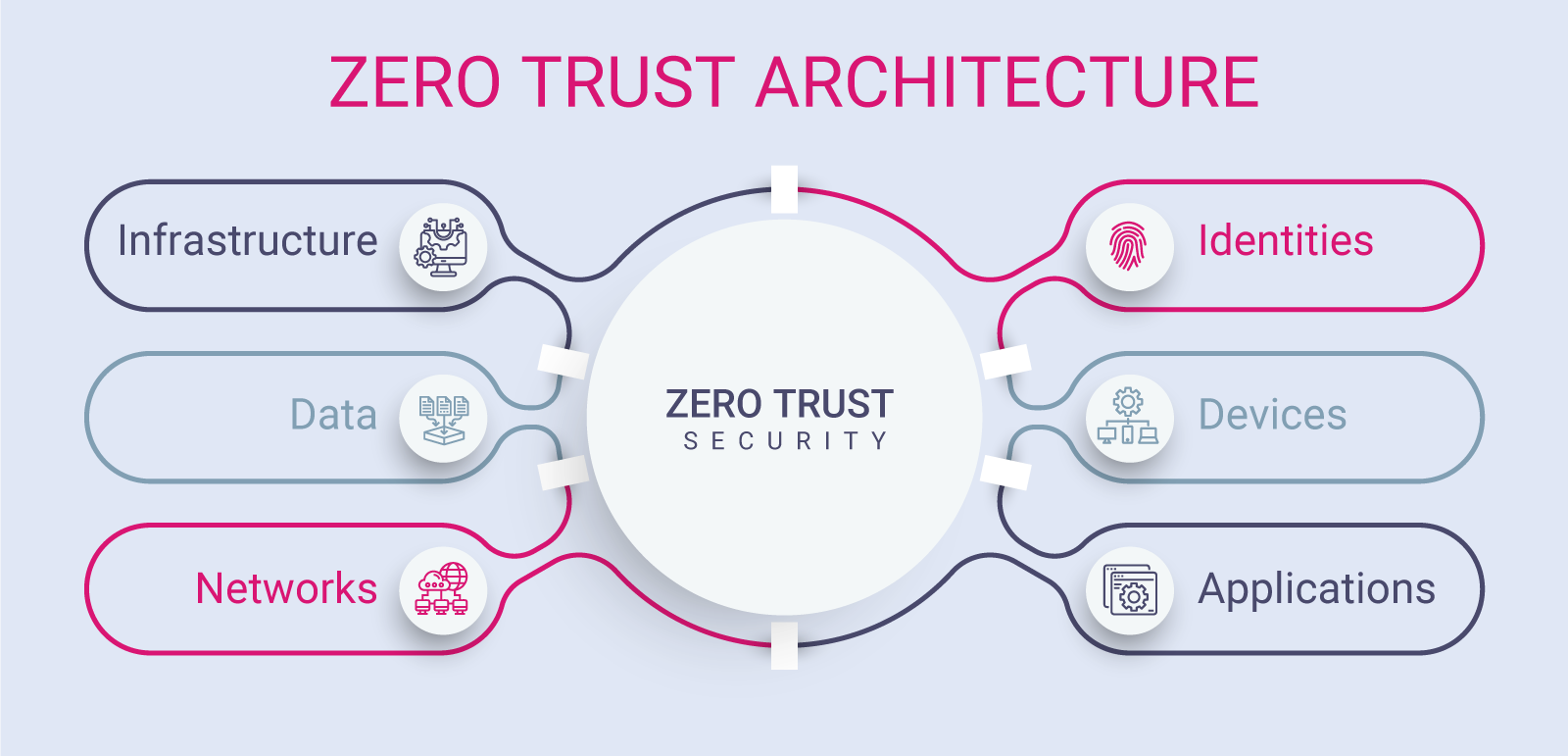
Trust assumptions and access control in both the traditional security models and ZTA are fundamentally different, reflecting contrasting approaches to cybersecurity. Both the security models focus on two different approaches, whether it is trust assumption or access control.
-
Trust Assumptions
Traditional Security: This security model operates on the assumption that once access is granted, everything within the network perimeter is trustworthy. Once users or devices are inside the network perimeter, they are often granted broader access and permission without continuous verification. This model is also referred to as the “Castle-and-moat” approach.
Zero Trust Architecture: In contrast, ZTA operates on the principle of “never trust, always verify.” It treats all devices and users as untrustworthy regardless of location. It stresses requiring continuous verification and authorization for every access request, whether inside or outside of the network.
-
Access Control
Traditional Security: Access control is typically managed at the network perimeter, relying on firewalls and Virtual Private Networks (VPNs) to protect against external threats. Once a device or user is granted access, they get wider access within the network without ongoing scrutiny.
Zero Trust Architecture: ZTA approaches different strategies; it employs a multi-layered approach to access control. It grants access to users and devices based on the principle of least privilege, ensuring that the access is granted only to those necessary for their roles. The access is continuously monitored and adjusted based on real-time risk assessments, minimizing potential damage from breaches.
Recommended: Top 10 Emerging Cybersecurity Technologies for 2025
2. Enhanced Security Features
Continuous monitoring and verification is a fundamental aspect of cybersecurity measures that enhance security and maintain robust security postures. Both models have two distinct approaches to providing enhanced security features, which can be summarized into components: micro-segmentation and continuous monitoring and verification. Both are critical components of ZTA, as well as the traditional security model in offering a secure and safe network to enterprises. These two components focus on enhancing security features by providing granular control over network traffic.
-
Micro-Segmentation
Traditional Security: Under this model, micro-segmentation is done with a focus on establishing a clear boundary between trusted and untrusted networks, which may be achieved through Virtual Local Area Networks (VLANs) or firewalls. However, these segmentation methods often lack the requirement to provide security from modern threats.
Zero Trust Architecture: This model uses micro-segmentation to divide networks into smaller, isolated segments, establishing secure zones within the network. Implementing this approach helps minimize lateral movement and the impact of breaches, as it makes it harder for attackers to navigate once they breach a segment. It limits the cyberattacks within specific segments and prevents unauthorized lateral movement between them.
-
Continuous Monitoring and Verification
Traditional Security: Threat detection and response skills in this model may be hampered by a lack of insight into east-west traffic or internal network communications. This model often depends on signature-based detection techniques and recurring assessments, which can overlook complex threats.
Zero Trust Architecture: It employs a micro-segmentation strategy in its cybersecurity measures, which provides an enhanced security layer requiring continuous monitoring of user activities and device behavior. Every access request is subject to real-time verification through methods such as multi-factor authentication and behavioral analytics. This security layer aids in identifying anomalies and potential threats more effectively.
3. Adaptability to Modern Threats
Amid rising cyber threats, adaptability to modern threats is a critical aspect as it distinguishes traditional security models from ZTA. How security models respond to breaches and carry out data protection strategies in their security measures plays a vital role in cybersecurity measures in rising modern threat environments.
-
Response to Breaches
Traditional Security: As this model focuses on the defense of perimeters, once an attacker breaches perimeter defenses, they get access to a broader space within the network without continuous verification, leading to delayed responses to breaches that occur internally.
Zero Trust Architecture: ZTA emphasizes continuous monitoring of all user activities and device behavior, which allows it to detect anomalies and potential threats in real time. This proactive stance allows it to facilitate quicker responses to security incidents by restricting access based on risk assessment and user behavior.
-
Data Protection Strategies
Traditional Security: This model primarily focuses on perimeter defenses to protect data, which impacts its data protection strategies. The less emphasis on data protection throughout the lifecycle makes their credibility to data protection strategies weak in modern threat environments.
Zero Trust Architecture: In contrast, ZTA prioritizes data-centric security measures such as data loss prevention and end-to-end encryption strategies. These strategies ensure that sensitive information enterprises are protected at all times, regardless of where it resides in the network.
Recommended: Cybersecurity Simplified: What is Cybersecurity in 2025?
4. Compliance and Governance
Traditional Security: Compliance and governance may often struggle in traditional security models due to their limited visibility across various systems, user behavior, and processes.
Zero Trust Architecture: It provides comprehensive visibility into all network activities, facilitating easier compliance with regulatory requirements and governance standards.
Conclusion
As cyber threats are getting sophisticated with their nature, behavior, and mechanism, the security models are taking shape and transforming their security measures. In the recent past, the transition from traditional security models to ZTA represents this change. This is a critical shift in the cybersecurity landscape addressing modern cybersecurity challenges. Moreover, ZTA has significantly outperformed the traditional security model in several key areas, such as enhanced security features by micro-segmentation and continuous monitoring and verification of users and devices on the network. Also, its adaptability to modern threats, such as quick response to data breaches, and strong data protection strategies have contributed to its credibility and usage. ZTA, with its adaptability to modern threats and enhanced security features, offers a more robust defense against increasingly sophisticated cyber threats. It eliminates trust assumptions, implements stringent access controls, and ensures continuous monitoring across the network.
To share your insights, please write to us at news@intentamplify.com