As enterprise IT environments grow more complex—spanning hybrid infrastructure, distributed teams, and increasingly interconnected digital services—organizations are rethinking how service management platforms support operational resilience and reliability. Traditional ITSM models built around static workflows and manual incident handling are giving way to AI-native platforms designed to embed automation, predictive intelligence, and real-time incident correlation directly into operational workflows.
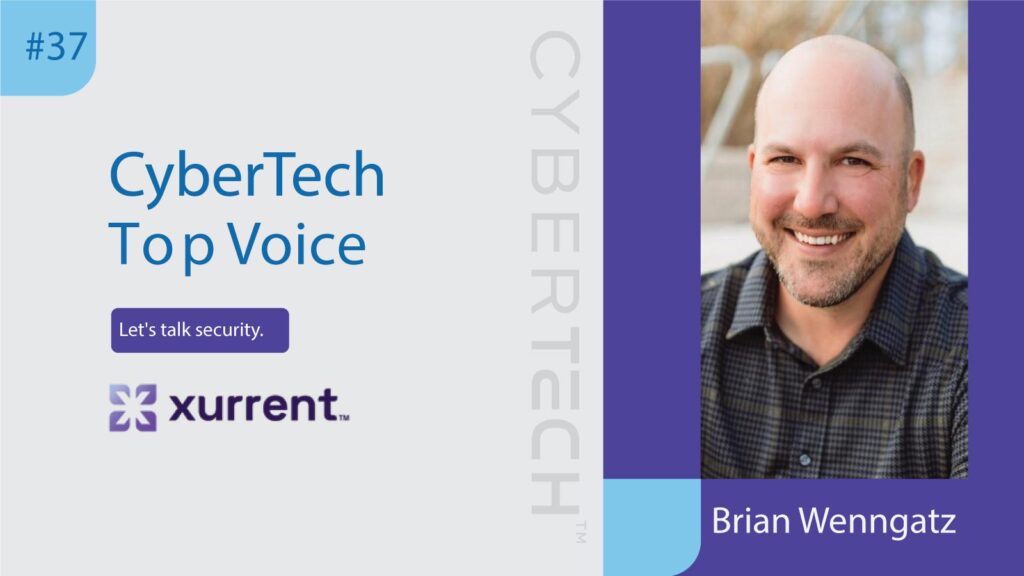
In this edition of the CyberTech Top Voice series, Sudipto Ghosh spoke with Brian Wenngatz, CEO of Xurrent, to discuss how AI-native service management platforms are reshaping enterprise IT operations.
Brian shares insights on the architectural shift toward intelligent service management, the growing role of AIOps in reducing alert fatigue, and how predictive automation is helping organizations reduce mean-time-to-resolution (MTTR) while improving operational resilience. The conversation also explores how enterprises are moving beyond reactive troubleshooting toward predictive service operations designed for modern digital infrastructure.
Here’s the full interview with Brian Wenngatz.
Xurrent has recently introduced Sera AI to modernize IT Service Management through embedded automation — how do you see AI-native service management platforms reshaping enterprise IT operations over the next few years?
What I keep watching for, and what I think will separate the winners from the rest, isn’t automation rates or feature lists. It’s architecture. The organizations that are pulling ahead aren’t the ones who bolted an AI layer onto an existing system. They’re the ones who rebuilt around intelligent workflows from the ground up, so that AI isn’t something their teams have to manage separately. It’s just how the platform works. That’s what we’ve tried to do with Sera AI inside Xurrent. The near-term result is faster resolution and less toil. The longer-term result is an IT organization that gradually shifts from reactive troubleshooting to genuinely predictive operations. We’re still early in that transition, but the architectural decisions organizations make right now will determine which side of it they land on.
Recommended CyberTech Interview: CyberTech Top Voice Interview with John Marshall, CEO at Userful

As enterprises look to operationalize AI across service management environments, what should technology leaders prioritize to ensure measurable business outcomes rather than isolated automation gains?
Chasing ROI from AI in service management starts with asking the wrong question. Leaders get seduced by automation rates and ticket deflection numbers, but those are outputs, not outcomes. The real question is whether AI is actually embedded in your workflows or just bolted on as another layer your team has to manage. Sera AI is built into the fabric of the Xurrent platform. It’s not a separate module or an add-on license, which means it’s acting on unified data across ITSM, ESM, and incident management from day one. That’s what lets it move beyond classification and routing to actually learning from your service topology and autonomously remediating issues. Measure MTTR, measure operational cost, measure whether your team is doing less toil. That’s the ROI conversation worth having.
With the acquisition of Zenduty, completing the incident response and remediation loop, how is Xurrent positioning itself to support real-time operational resilience for enterprise customers?
Incident management has a dirty secret: most tools only solve half the problem. They help you respond, but they drop the ball the moment the incident is closed. When we brought Zenduty into the fold — now fully integrated as Xurrent IMR — it completed something we’d been building toward: full cycle incident management, from detect through response, communication, and remediation, all the way to learning from the incident. That last stage is the one nobody invests in, and it’s where the real value is. Every incident generates a postmortem, but postmortems without follow-through are just documentation theater. Xurrent’s ITSM backbone ensures the lessons actually turn into assigned tasks, tracked to completion, so the same incident doesn’t become a recurring problem six-months later.
Many organizations are still navigating fragmented ITSM, ITOM, and ESM environments—how does Xurrent’s ITxM approach help unify service operations across these traditionally siloed systems?
Something we hear consistently from enterprise IT leaders is that their biggest challenge isn’t finding the right tool. It’s that the tools they have were never designed to work together. They’ve accumulated ITSM, ITOM, and incident management platforms that don’t share context, and the result is fragmented workflows, missed handoffs, and teams spending more time navigating systems than actually solving problems. ITxM is our framework for addressing that at the architecture level, not by adding another integration layer, but by building a unified operational fabric where service management, operations, and incident response run on shared data from the ground up. Account Trusts, a core building block of the Xurrent platform, is a good example of what that looks like in practice: it’s not a feature we added on top of the platform, but a structural mechanism that lets MSPs, internal teams, and external providers collaborate on shared workflows with full data governance built in by design. When the architecture itself enforces how teams work together, you get a fundamentally different outcome than when you’re trying to stitch that together after the fact.
From an AIOps perspective, what are the biggest operational inefficiencies that enterprises are looking to eliminate today through intelligent automation and predictive incident management?
The problem isn’t that enterprises lack monitoring. It’s that they have too much of it. Running 20 or more monitoring tools simultaneously sounds like good coverage until you realize that most of those alerts are firing against static thresholds that haven’t kept pace with the complexity of the environment. Engineers end up triaging noise instead of resolving actual problems. Xurrent’s AIOps approach works by correlating signals across the infrastructure layer, grouping related alerts, identifying patterns, and surfacing only what genuinely needs human attention. The next frontier beyond noise reduction is predictive remediation: initiating the right response before a user even notices something is wrong. The organizations getting this right aren’t just reducing noise — they’re building the kind of operational foundation where their teams can get ahead of problems rather than perpetually respond to them. That’s the shift from reactive to genuinely predictive, and it’s what intelligent automation should ultimately be working toward
Recommended CyberTech Interview: CyberTech Top Voice Interview with Bobby Ford, Chief Strategy & Experience Officer at Doppel
Xurrent’s recent integration within N-able’s Technology Alliance Program highlights the growing importance of ecosystem partnerships—how critical are integrations in driving adoption of modern service management platforms?
Integrations only drive adoption when they remove friction rather than add it. The mistake most platforms make is treating integrations as a connectivity checklist. Yes, we connect to X, yes, we connect to Y, without asking whether those connections actually change how teams work day to day. The N-able partnership is a good example of what we’re trying to do differently: embedding Xurrent’s AI-native workflows directly into the RMM environment where teams already operate, so automated ticketing and routing are available in context rather than requiring a separate login or a manual handoff. The broader principle is that a platform earns its place in an organization’s stack by disappearing into the background. When teams stop thinking about the tool and just use it, that’s when you know the integration is working
Could you share some industry-specific use cases where Xurrent’s platform has helped customers move from reactive incident resolution to predictive service operations?
The organizations that make this shift successfully tend to have one thing in common: they treat service management as an operational system, not a support function. Vitality is a good example. They’re a UK health and life insurance provider with over a million members, running service operations across internal teams, third-party providers, and franchise networks simultaneously. Their previous platform had become a maintenance project in its own right, where every change required a specialist and a timeline. Within a year of moving to Xurrent, help desk call volume had dropped, not because problems disappeared, but because the team was getting ahead of them. Nearly 70% of issues are now resolved through self-service. That’s the number that tells the real story: when users stop calling because they already have what they need, you’ve crossed the line from reactive to predictive.
How are enterprise customers leveraging AI-driven ticketing and escalation capabilities to improve service availability and minimize downtime across mission-critical environments?
The ticket itself is rarely where the problem starts. It’s a signal that something has already gone wrong and a human noticed. What AI-driven escalation does well is compress that gap: correlating an incoming incident against historical patterns, recognizing the combination of symptoms, identifying the escalation path that worked before, and routing it to the right expert before the situation compounds. For mission-critical environments, that institutional memory matters enormously. The knowledge that resolves an issue is available when the incident happens, not just when the right person happens to be on shift. The teams we talk to in these environments ask a simple question: does the platform learn? Does each incident make the next one easier to handle? That’s the capability worth evaluating.
Additionally, Xurrent IMR has proven in the field a 60% drop in Mean-Time-To-Resolution (MTTR through) its best in class alerting and AI powered escalation. A drop in MTTR means a drop in downtime – simple as that. When you get the right people to the problem faster – you reduce downtime.
As digital transformation initiatives scale globally, what role does observability and real-time service status communication—such as through the StatusCast acquisition—play in improving customer trust and operational transparency?
When an outage hits, the support queue fills up fast. Not because the problem is worse, but because customers have no visibility into what’s happening. That’s the gap Xurrent Status Pages, formerly StatusCast, was built to close. It automatically syncs incident states from the platform to branded status pages, so updates go out the moment something changes without anyone touching a keyboard. We’re seeing organizations cut inbound support volume during outages simply because users already know what’s broken and when it’ll be fixed. What I find meaningful about this is what it says about trust. Trust in a technology platform is built or lost in moments of failure, and automatic status communication is how you make consistent, honest communication a system rather than a best effort.
In your view, how should technology leaders evaluate ROI when investing in AI-powered service management platforms versus traditional ITSM tools?
Is there even such a thing as non-AI powered ITSMs anymore? The reality is that ITSM has been extremely well positioned to capitalise on the power of AI rapidly. We started adding ticket summaries and auto-routing and auto-KB authoring over 2 years ago.
The metrics most vendors lead with — ticket volume, deflection rates, automation counts — look good in a dashboard but they don’t tell you whether the business is actually running more efficiently. They tell you whether the platform is staying busy. The more honest framework is to ask: are incidents being resolved faster, are engineers spending less time on work that shouldn’t require their expertise, and is operational overhead going down as the business scales up? If those numbers aren’t moving, it’s worth asking whether your platform is actually working from a complete picture or just automating within its own silo. The platforms that compound over time are the ones where AI is doing the invisible work, so your team can focus on the problems that actually require human judgment. The other thing worth noting: traditional ITSM tools do what you configure them to do, consistently. AI-native platforms get better the longer they run — learning your environment, your escalation patterns, your service topology. That compounding effect is hard to see in a twelve-month payback analysis, but it’s very clear on a three-year horizon.
Looking ahead, how do you see AI-led automation influencing the future of enterprise service delivery — particularly in hybrid and distributed infrastructure environments?
What I’m most excited about looking ahead isn’t any particular feature. It’s a shift in what AI is actually expected to do. We’re moving from AI that surfaces problems to AI that steps in and handles them: restarting a service, scaling infrastructure, isolating a degraded component based on real-time conditions. In complex hybrid and distributed environments, where a human operator simply can’t maintain context across everything simultaneously, that kind of agentic capability becomes critical to operational continuity. The enabler most people underestimate is natural language as a universal interface. When an engineer can describe what they’re seeing in plain terms and get the full context behind it, you don’t need to be a platform expert to get an expert-level answer. The organizations investing in this thoughtfully right now won’t just operate more efficiently. They’ll be structurally more resilient, and I think that inflection point is closer than most people expect.
What I’m even more convinced of: as increasingly powerful agentic capabilities come to market, ITSM becomes more important, not less. The more workflows get automated and AI agents take on complex tasks, the more critical governance becomes. Logging what was done, when, and who approved it doesn’t stop mattering just because it was an AI agent that executed it — if anything, the stakes are higher.
Recommended CyberTech Interview: CyberTech Top Voice: Interview with Kev Breen, Senior Director of Cyber Threat Research at Immersive
Thank you Brian! We appreciate your time and look forward to featuring your insights in the CyberTech Top Voice program.
To participate in our interviews, please write to our CyberTech Media Room at info@intentamplify.com