In today’s hyperconnected world, cybersecurity discussions often focus on the latest technology- AI-driven monitoring, firewalls, or encryption. Yet, despite these tools, breaches continue to make headlines. The surprising truth? Technology alone isn’t enough. People matter more.
The Human Factor in Cybersecurity
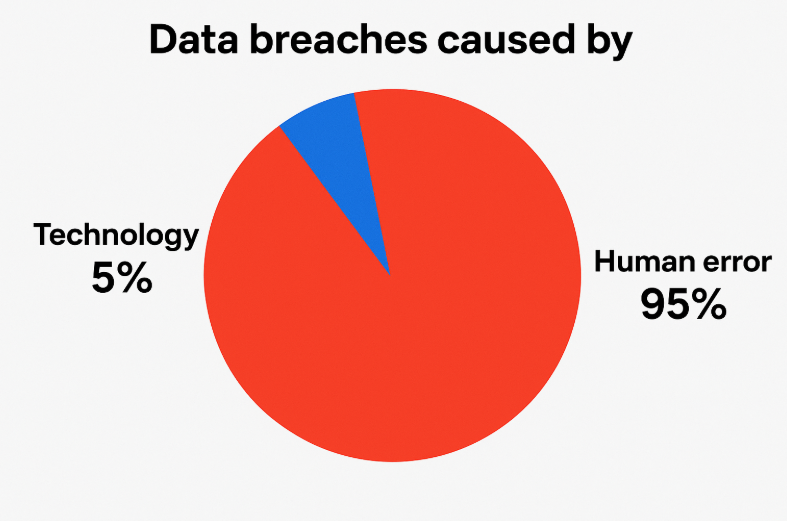
According to the World Economic Forum (WEF), 72 % of organizations state their cyber risks have increased over the past 12 months. According to the World Economic Forum, 95% of data breaches in 2024 were linked to human error. It wasn’t sophisticated malware or a zero-day exploit- it was employees clicking phishing emails, misconfiguring systems, or neglecting updates. Even the most advanced cybersecurity tools can be undone by a single human misstep. Think of it like locking a high-security vault but leaving the key under the mat.
Training Beyond IT Specialists
Cybersecurity expertise has traditionally been confined to IT teams. Today, everyone- from the front desk to the C-suite- needs basic awareness. The goal isn’t to turn employees into cybersecurity experts but to make them vigilant partners.

Practical training programs are essential. Short courses, scenario-based exercises, and AI-assisted modules help employees understand threats and respond appropriately. Crucially, training must teach “why”– not just “how”- to ensure employees recognize the impact of their decisions.
AI: Amplifying Human Risks
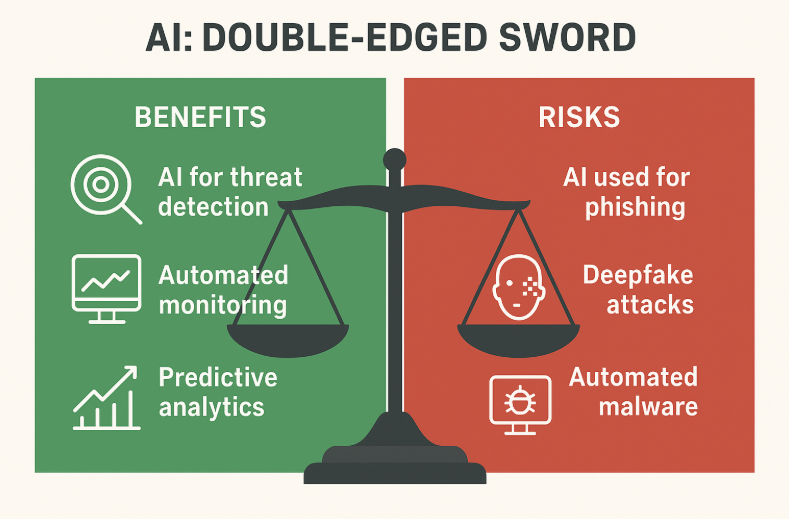
Artificial intelligence has revolutionized cybersecurity, but it also introduces new risks. Deepfake attacks, AI-generated phishing campaigns, and automated malware lower the barrier for cybercriminals. Employees untrained in evaluating AI outputs may make decisions that inadvertently compromise security.
Ethical reasoning and critical thinking are vital. AI is a tool, not a replacement for human judgment. Organizations that embed these principles reduce mistakes and strengthen defenses.
Cultivating a Security-First Culture
Cybersecurity can’t be siloed. Organizations must foster a culture where security is everyone’s responsibility. Encouraging reporting, rewarding vigilance, and promoting collaboration transforms employees into a “human firewall.” Diverse teams provide multiple perspectives, reducing blind spots and improving resilience.
Cybersecurity also extends beyond individual organizations. Shared knowledge, cross-industry partnerships, and public awareness create a safer digital ecosystem for everyone. Security becomes not just a corporate obligation but a collective societal effort.
Key Takeaways
- Human error drives most breaches: 95% of breaches stem from mistakes, not technology failures.
- Training should reach everyone: Awareness must extend beyond IT to all employees.
- Ethics and reasoning are essential: Employees must understand AI’s limits and implications.
- Culture outweighs tools: Integrating security into daily practices strengthens defenses.
- Collaboration enhances resilience: Shared responsibility improves organizational and societal security.
The future of cybersecurity isn’t about replacing humans with smarter technology. It’s about empowering humans to work alongside technology wisely. As the World Economic Forum notes, “Firewalls and encryption are important, but people matter more.” Organizations embracing this approach will not only protect themselves but also cultivate resilient, adaptive, and ethically responsible workforces.
Conclusion
The future of cybersecurity hinges not on the sophistication of technology alone but on the people who use it. While AI, firewalls, and advanced tools are critical, they are only as effective as the humans guiding and interacting with them. By investing in comprehensive training, fostering ethical awareness, and cultivating a culture of shared responsibility, organizations can transform every employee into a frontline defender.
In a world where threats evolve faster than software updates, people remain the ultimate safeguard. Embracing this human-centered approach ensures not only stronger security but also a resilient, adaptable, and forward-thinking workforce- ready to face the challenges of tomorrow’s digital landscape.
FAQs
1. Why is human error the leading cause of breaches?
Most breaches occur due to misjudgments like clicking phishing links or mismanaging passwords, which technology alone cannot prevent.
2. How can companies train employees effectively?
Scenario-based exercises, AI-assisted modules, and ethical decision-making programs keep employees engaged and prepared.
3. Can AI replace human oversight in cybersecurity?
No. AI assists detection but lacks judgment. Human oversight ensures responsible and effective use.
4. What is a “human firewall”?
It refers to trained employees who actively detect and respond to threats, complementing technical defenses.
5. How can organizations foster a security-first culture?
By embedding security into daily workflows, rewarding vigilance, and promoting cross-team collaboration.
Don’t let cyber attacks catch you off guard – discover expert analysis and real-world CyberTech strategies at CyberTechnology Insights.
To participate in upcoming interviews, please reach out to our CyberTech Media Room at info@intentamplify.com.