Cloud support platforms have become the backbone of customer experience. They move conversations, data, tickets, and integrations across thousands of users every day. With that scale, security isn’t just a feature anymore – it’s an expectation. And the latest upgrade of Zendesk shows that the platform knows it.
If you’ve ever managed support operations during high-traffic seasons or watched API logs like a hawk during a product launch, you already understand the value of strong security. When a platform strengthens its shield, your entire organization benefits – without adding friction or slowing down workflows. According to Gartner, 96% of organizations will address cybersecurity vulnerabilities in 2026, while 94% will include data-governance controls in their audit plans.
What’s Changing: Security Designed for Modern Cloud Support
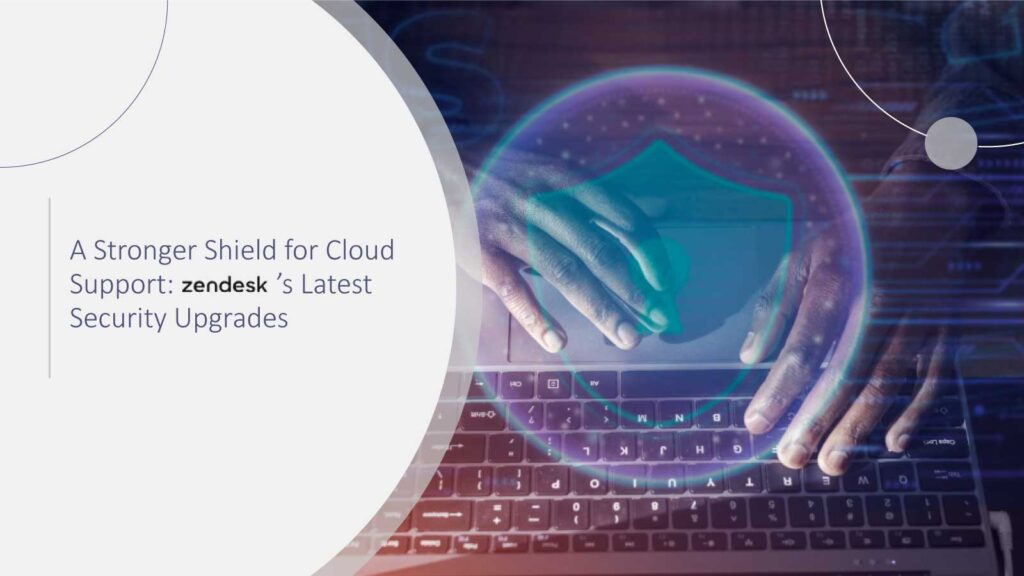
Zendesk has rolled out a new set of security-focused enhancements designed to make protection proactive, unified, and automation-ready. Instead of adding scattered security toggles, Zendesk has bundled core functions into a complete security posture approach.
Here are the updates that matter most:
1. Security Posture Dashboard
A centralized dashboard in the Admin Center now gives teams a top-down view of privacy, authentication, password policies, attachments, and data-retention settings. No more digging across menus – everything sits in one visibility layer. McKinsey reports that Organizations that unify security settings and visibility across tools reduce operational risk by up to 50% and lower admin workloads by 30%.

2. Advanced Data Privacy & Protection Add-on
This now includes:
- Bring Your Own Key (BYOK) encryption
- Automatic redaction of personal identifying information
- Role-based masking so agents only access necessary fields
- Custom data-retention controls
For companies handling confidential records, this is a major win for compliance and customer trust.
PwC’s 2025 Trust Survey found that “87% of consumers are more likely to stay loyal to brands that visibly protect personal data”.
3. API & Integration Governance
Zendesk states that APIs are now one of the fastest-moving access points for cyberattacks across SaaS ecosystems, which is why the platform has tightened integration authorization rules. Public apps must use OAuth rather than customer credentials, and all integrations must identify the calling application via mandatory request headers. That means clearer audit trails and fewer blind spots. The IBM Cost of a Data Breach Report 2025 reveals that “41% of breaches originate from compromised credentials or exposed API keys”.
4. Attachment Safety Controls
Admins can now restrict upload types for both customers and agents. This reduces entry risks from high-risk file types without disrupting customer conversations.
5. Token Visibility & Lifecycle Management
Admins can view token ownership, scope, creation date, and usage logs. For high-growth organizations scaling support teams, this clarity removes hidden access points and simplifies offboarding.
Why These Updates Matter
Security upgrades don’t always sound exciting – until they save the day. Think about how many apps, bots, and automations connect to your support platform. Now, imagine one unused integration still holding full access.
With Zendesk’s improvements:
- Risk is reduced before incidents occur.
- Admins gain accuracy without extra effort.
- Teams scale safely while automating more workflows.
- Leadership gains confidence by knowing access is transparent.
Simply put, you get better control without sacrificing speed – the ideal formula for modern support operations.
A Quick Example
A U.S. e-commerce company recently audited its integrations and discovered 12 API tokens tied to retired vendors. Before Zendesk’s token-visibility overhaul, finding those access points would’ve taken weeks. Now? They were reviewed and revoked in under an hour.
Security doesn’t eliminate velocity – it amplifies it when done right.
What To Do Next
A few practical steps to take advantage of these upgrades:
- Review the Security Posture Dashboard weekly.
- Replace unused API tokens with OAuth-based apps.
- Turn on data masking for personally identifiable information.
- Use attachment-type controls to minimize inbound threat risk.
- Activate retention rules that align with internal governance.
Each step builds a stronger shield – with minimal friction for agents and customers.
Conclusion
Zendesk’s newest security upgrades mark a significant step toward safer, smarter, and more transparent cloud support. With unified visibility, governance, and user-centric control, organizations now have the tools to protect sensitive customer interactions while still moving fast.
Cloud support is becoming more central to customer trust every day. These upgrades make that trust easier to earn – and easier to maintain.
FAQs
1. Do these upgrades require major setup time?
No. Most features, like the Security Dashboard and attachment restrictions, are enabled from the Admin Center with minimal configuration.
2. Will these updates affect agent productivity?
No. The upgrades focus on visibility and access control rather than restricting functionality, so workflows remain smooth.
3. Is the Advanced Privacy Add-on only for large enterprises?
It benefits every industry, but it’s especially useful for companies managing regulated or confidential data.
4. Are the new API governance rules mandatory?
Yes for public integrations. OAuth and app-identity headers are now part of Zendesk’s marketplace requirements.
5. Can teams use upgrades without changing existing workflows?
Yes. Most improvements enhance security transparently while letting support operations run as usual.
Don’t let cyber attacks catch you off guard – discover expert analysis and real-world CyberTech strategies at CyberTechnology Insights.
To participate in upcoming interviews, please reach out to our CyberTech Media Room at info@intentamplify.com.