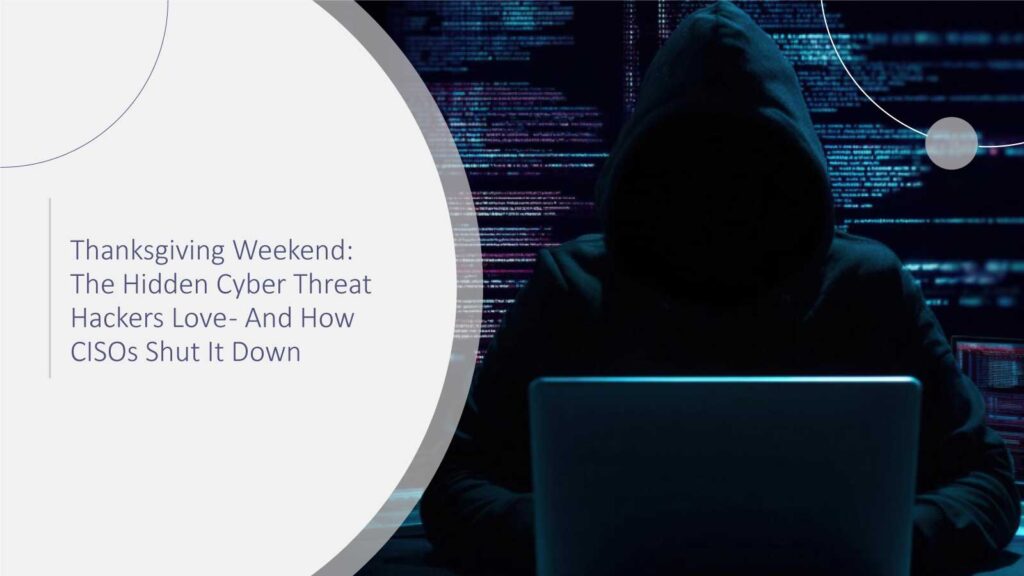
Thanksgiving weekend is designed for rest, family gatherings, and unplugging from work. Many offices operate with reduced staff, digital activity slows down, and leadership teams take a well-earned pause. Yet, beneath this quiet period, security teams know something else is quietly at work – cyber adversaries who see the holiday as a strategic opening.
This article explores why the Thanksgiving window has become a preferred moment for cyberattacks, how attackers typically execute during this period, and how CISOs prepare to protect business continuity without disrupting the spirit of the holiday break.
Why Thanksgiving Weekend Becomes a Prime Cyber Opportunity
The spike in risk during long weekends is not accidental. Attackers understand behavior patterns as well as system vulnerabilities.
- Reduced staffing means slower response times. Many organizations operate with limited monitoring over holidays, and even small delays in detection can allow attackers to escalate privileges and move laterally.
- Higher remote access usage. Employees logging in from home, family devices, and unfamiliar networks give attackers more entry points. In the first six months of 2023, IoT malware rose by 37% globally (77.9 million attacks) compared with the first six months of 2022.
- Holiday-themed communication becomes a lure. Phishing emails labeled as “holiday bonus updates,” “urgent shipping delays,” or “travel confirmations” catch users off guard.
One security director described Thanksgiving as “the perfect collision of distraction and digital traffic.” That combination alone elevates the risk more than any new exploit ever could. Organizations spent approximately US$ 200 billion on cybersecurity products and services in 2024 – up from about US$ 140 billion in 2020. The vended cybersecurity market is expected to grow ~12.4% annually between 2024 and 2027.
How Attackers Typically Strike During Thanksgiving Weekend
While attack styles vary across industries, five tactics are particularly common during November:

1. Holiday-themed phishing
Adversaries time emails and SMS messages tied to travel, purchases, and bonuses because people are more likely to click before thinking.
2. Ransomware launches when oversight is low
Encrypted systems deployed on a Thursday night may go unnoticed until Monday morning – maximizing downtime and financial impact.
3. Account takeover during high transaction volume
E-commerce, digital payments, and customer logins surge during Thanksgiving week. Attackers hide credential-stuffing and bot attacks within that surge. 62% of organizations experienced a deep-fake attack involving social engineering or automated processes in the last 12 months; 32% reported attacks on GenAI application infrastructure.
4. Business Email Compromise (BEC) for urgent approvals
Fake requests that appear to come from executives traveling or working remotely often target finance personnel who feel pressure to “quickly approve before the holiday ends.”
5. Exploiting third-party access
Vendors, partners, and managed service providers may operate on holiday schedules too, creating an opportunity to infiltrate through trusted connections.
Put simply, attackers don’t always need to be loud or clever. They only need defenders to be relaxed.
In 2023, 12% of data breaches across industries occurred via attacks on third-party software vendors.
How CISOs Shut It Down Without Ruining the Holiday
Security leaders don’t solve this by staying online 24/7. Instead, they plan so everyone – including the security team – can enjoy the long weekend without unnecessary anxiety.
1. Hardening before the holiday
Critical patches, identity access reviews, and privilege audits are prioritized ahead of the break. Even small oversights can become entry points when detection is delayed.
2. A realistic holiday staffing model
Instead of expecting “everyone on standby,” CISOs clearly outline escalation paths, designate coverage rotations, and pre-define who approves high-risk decisions.
3. Awareness messages to employees
A short internal memo works wonders:
“If you receive unexpected financial requests, shipment updates, or bonus-related emails – report first, don’t click.”
4. Monitoring built for low-activity windows
Automated alerting, anomaly-based detection, and endpoint protection help catch the things humans might miss in a weekend lull.
5. A post-weekend review
On Monday morning, alert logs, financial requests, authentication activity, and vendor access are revalidated.
This isn’t paranoia – it’s preparation that gives everyone the peace of mind to unplug.
A Quick Thought Before You Log Off for Thanksgiving
Most cyberattacks during holiday weekends are not “zero-day brilliance.” They’re preventable incidents powered by human distraction. The organizations that stay resilient are the ones that treat holidays as a predictable risk window rather than a quiet break in the cyber calendar.
Security shouldn’t overshadow Thanksgiving – it should protect it.
FAQs
Q1. Why do cyberattacks increase during Thanksgiving weekend?
Because staffing and monitoring decrease while digital activity and remote access increase, making exploitation faster and harder to detect.
Q2. Who is most targeted during holiday periods – IT teams or regular employees?
Attackers primarily target regular employees first, especially those involved in finance, approvals, and remote access.
Q3. What can employees do to stay safe during Thanksgiving?
Avoid clicking on unexpected holiday offers, use MFA, and verify payment-related requests with a phone call before approving.
Q4. What defenses matter most for organizations?
Pre-holiday patching, identity access reviews, automated alerting, and clear escalation coverage.
Q5. Are small businesses at high risk, too?
Yes – attackers rely on reduced security and fast payment approvals, which makes SMBs just as appealing as large enterprises.
Don’t let cyber attacks catch you off guard – discover expert analysis and real-world CyberTech strategies at CyberTechnology Insights.
To participate in upcoming interviews, please reach out to our CyberTech Media Room at info@intentamplify.com.