For years, job-role access control was the rational default.
Start with the role. Map the systems that role touches. Bundle those permissions together and grant access as a package.
It created order. Clear boundaries. Something security and compliance teams could articulate without friction and validate during an audit.
For years, that structure gave enterprises what they valued most. Consistency and control.
However, that effectiveness rested on a set of assumptions that no longer hold. Job responsibilities remain stable, systems are centralized, and users operate within fixed boundaries and consistent environments.

Today’s reality is very different. Cloud-first architectures, SaaS sprawl, APIs, contractors, and distributed teams have dissolved those boundaries almost entirely.
Job-Role Access Control Was Designed for a Different Era
Traditional role-based access control (RBAC), or what many teams now call job-role access control, was built around the idea that a job title is a reliable proxy for access needs. If you’re in finance, you get finance tools. If you’re in HR, you get HR systems.
But the modern enterprise doesn’t map cleanly to job titles anymore.
A product manager might need access to analytics, CRM, ticketing, feature flags, and cloud dashboards. Some of that access is temporary, some regional, and some project-specific. Meanwhile, contractors, partners, and service accounts blur the edges further. Machine identities now outnumber human users in many environments.
Trying to model all of that through fixed roles becomes a combinatorial problem fast.
Okta’s Businesses at Work 2024 report shows large enterprises using 200 to 300-plus SaaS applications on average. Each new app introduces another permission model to stitch into your role framework.
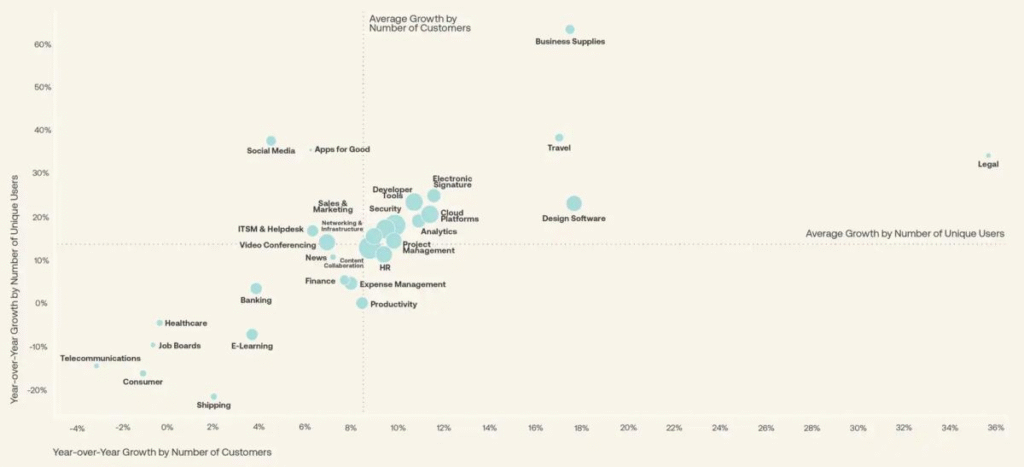
Multiply that across departments, and you end up with hundreds or thousands of “roles” that no one fully understands. That’s not job-role access control anymore. That’s entropy.
How Roles Quietly Expand Beyond Their Intent
Roles accumulate privileges over time. Nobody removes anything because it might break something. Exceptions become permanent. Temporary access lingers. Eventually, the “customer support” role quietly includes far more than any support agent actually needs.
From a security perspective, those bloated roles are exactly what attackers want.
Most real-world breaches aren’t about breaking cryptography. They’re about abusing legitimate access. Phish a user. Reuse a token. Then move laterally using whatever the role already grants.
CISA’s 2024 Zero Trust Maturity Model calls out standing, broad privileges as a core risk and recommends continuous, context-aware authorization decisions instead of static assignments. That’s essentially an admission that classic job-role access control, by itself, is too blunt for today’s threat landscape.
Risk changes minute by minute. Roles don’t.
If someone logs in from a managed device during business hours, maybe it’s fine. If the same identity hits sensitive systems from an unmanaged laptop overseas at 3 a.m., the answer should be different. Job-role access control treats both events the same.
The Cybersecurity Reality, Context Beats Titles
What’s replacing traditional job-role access control isn’t a new acronym so much as a new philosophy.
Access decisions are becoming contextual and policy-driven.
Attribute-based access control. Policy-based engines. Risk-adaptive authentication. Different labels, same idea.
Signals start to matter. Device posture. Location. Behavioral anomalies. Sensitivity of the resource. Threat intelligence.
A growing share of enterprises are moving toward attribute-based and dynamic authorization models as primary controls for new systems, with roles acting as a coarse starting point. In practice, that means job-role access control becomes scaffolding, not enforcement.
You see this clearly in platforms like Microsoft Entra ID, where RBAC roles are now layered with Conditional Access policies. The role says you can access something. The policy decides whether you should right now.
That difference is everything.
Implications for Cybersecurity Leaders
If your security program still treats job-role access control as the backbone, you’ll keep fighting fires. Role reviews. Privilege cleanups. Endless audits.
If you treat roles as just one signal among many, you start reducing blast radius instead of just documenting it.
That means investing in identity telemetry, device management, and policy engines that evaluate access continuously. It means managing policies like code. Versioning them. Testing them. Auditing them. Because static spreadsheets won’t explain dynamic decisions to regulators or boards.
There are trade-offs. Dynamic systems are harder to explain. More expensive. More engineering-heavy. Compliance teams sometimes prefer the simplicity of a role matrix.
But simplicity that hides real risk isn’t governance. It’s comfort.
Where Job-Role Access Control Still Fits
Job-role access control still holds value as a baseline. It’s useful for expressing intent at a high level and onboarding users quickly. It just shouldn’t be the final gate.
Think of roles as eligibility markers. Not entitlement guarantees. The final decision should always be contextual. Always adaptive.
For decision-makers, that’s the real takeaway. The future of access control isn’t about designing better roles. It’s about designing smarter policies that understand risk in real time. Organizations that accept the demotion of job-role access control will shrink their attack surface.
FAQs
1. Is role-based or job-role access control still sufficient for modern enterprise security?
Job-role access control works as a baseline for grouping users, but it cannot account for dynamic risk, cloud sprawl, or third-party access. Most breaches now exploit over-permissioned identities, which static roles fail to constrain in real time.
2. What should replace traditional RBAC in a cloud-first environment?
Dynamic, policy-driven authorization models. Typically, a mix of attribute-based access control (ABAC), risk-adaptive policies, and Zero Trust principles. These systems evaluate context like device posture, location, session behavior, and resource sensitivity before granting access.
3. Why does Job-Role Access Control increase breach risk at scale?
Temporary access becomes permanent, exceptions stack up, and reviews lag behind change. The result is a standing privilege that attackers can exploit for lateral movement after credential compromise.
4. How should CISOs modernize access control without disrupting operations?
Keep roles for coarse grouping, then introduce conditional access, MFA, device trust checks, and just-in-time access for sensitive systems. Treat policies as code and automate reviews. This reduces risk without forcing a full rebuild of the identity stack.
5. What metrics matter when evaluating next-generation access control investments?
Track standing privileges eliminated, percentage of dynamic policy enforcement, privileged access duration, time to revoke access, and lateral movement exposure.
To participate in upcoming interviews, please reach out to our CyberTech Media Room at info@intentamplify.com