The $400 million, three-year expansion of the alliance between PwC and Google Cloud is not a routine services deal. It is a signal about where enterprise cyber defense is heading and what large organizations now believe is required to keep pace with adversaries who are automating faster than defenders can hire.
At a surface level, the announcement focuses on familiar themes. AI Security. AI-driven detection. Intelligence-led defense. Modernized security operations across hybrid and multi-cloud estates. But the size, duration, and framing of the investment suggest something more structural. Large enterprises are no longer trying to “optimize” security stacks. They are trying to re-architect how defense scales when attackers’ marginal costs are approaching zero.
That shift explains why this partnership matters to CISOs and security-minded business leaders. It also explains why similar alliances are likely to follow.
Why AI-First Security Is No Longer a Choice
For most large organizations, the security challenge is no longer visibility in isolation. It is coherence. Years of point-solution adoption have left security teams with fragmented telemetry, brittle workflows, and alert volumes that outstrip human capacity.
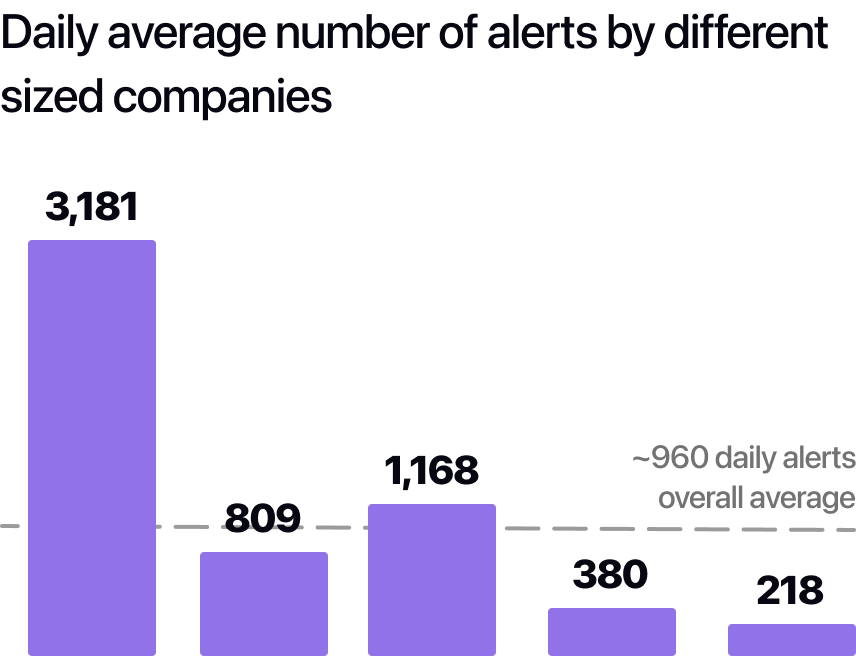
Recent industry data underscores the gap. According to Google’s Cybersecurity Forecast 2024 and corroborated by Verizon’s 2024 Data Breach Investigations Report, attackers are compressing the time between initial access and lateral movement. In many cases, compromise is unfolding in minutes, not days. Human-centric triage models were never designed for that tempo.
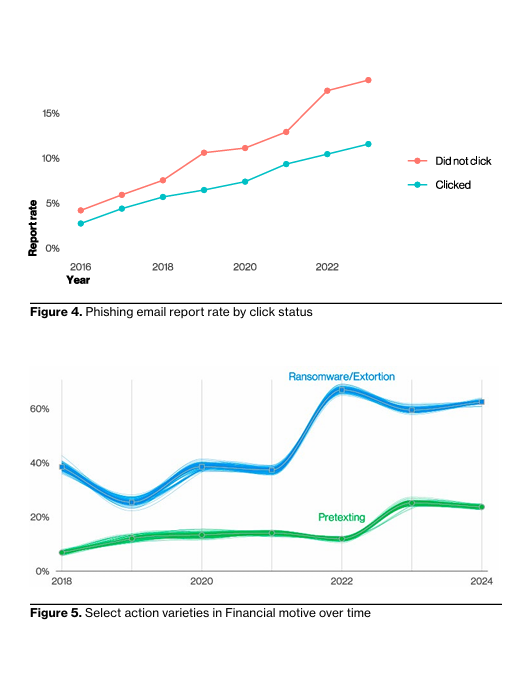
Source: Verizon Data Breach Investigations Report
This is the context behind PwC’s decision to double down on its Google Cloud Security alliance. The aim is not simply better tooling. It is to pair large-scale AI platforms and threat intelligence with services that can absorb operational complexity and keep systems functioning under constant pressure.
Hank Thomas, co-founder and CEO of Strategic Cyber Ventures, sees this as an inflection point rather than a one-off investment.
“This collaboration reflects where the market is going. Enterprises are dealing with fragmented tools, talent shortages, and growing complexity, and pairing AI with large-scale security services can help accelerate modernization. It also signals that AI-driven, intelligence-led defense is becoming table stakes, which likely means we’ll see more partnerships like this.”
That “table stakes” framing is important. Once a capability becomes assumed, the competitive question shifts from whether to adopt it to how effectively it is operationalized.
What the PwC and Google Cloud Model Changes
By embedding AI-driven analytics and threat intelligence into managed workflows, the PwC-Google Cloud model aims to compress the distance between signal and action. Not just faster alerts. Faster decisions.
Kamal Shah, CEO of Prophet Security, sees this alignment as consistent with what security teams are already doing on the ground.
“This latest collaboration once again reaffirms that AI adoption is tracking with what we see in security workflows every day. More and more teams are using AI to move faster through noise, automate repetitive and tedious work, and spend more time on the parts that require human judgment. It speeds up the tedious steps, pulling signals out of large datasets, summarizing findings, refining hypotheses, scoping affected versions, and prioritizing what to test next during recon and triage, which frees more time for creativity, judgment, and chaining impact. We also see AI helping with code comprehension, patch diffing, fuzzing scaffolding, and cleaner reproduction steps and impact write-ups. Defenders are adopting the same pattern to keep pace with faster loops, reduce noise, and move from signal to action with disciplined decision-making.” Shah says.
He points to use cases that extend well beyond alert triage. Hypothesis refinement. Scope analysis. Prioritization during recon and response. Even code comprehension and patch diffing.
“The good news is that defenders are also increasingly using AI to fight AI. According to the State of AI in SOC Report, security leaders anticipate AI will handle approximately 60% of SOC workloads within the next three years. AI enables them to move faster through noise, automate repetitive and tedious work, and spend more time on the parts that require human judgment,” he added.
This is not speculative. According to Prophet Security’s State of AI in SOC Report 2024, security leaders expect AI to handle roughly 60 percent of SOC workloads within three years. That figure reflects current adoption trajectories, not aspirational roadmaps.
Source: Prophet Security’s State of AI in SOC Report
The practical consequence is a redefinition of the SOC role.
The Economics of Defense Are Breaking
One of the least discussed aspects of AI-driven security is cost asymmetry. Attackers can scale automation cheaply. Defenders cannot scale people at the same rate. This imbalance is already visible in breach response budgets and burnout metrics.
Ram Varadarajan, CEO of Acalvio, frames the problem in economic terms.
“Defenders are expending finite resources against adversaries whose AI automation is driving attack costs toward zero, a gap that’s not going to be closed by adding more disconnected defensive security tools,” Varadarajan says. “Clouds are going to continue to sprawl – that’s a reality. To be able to scale with the attackers, AI-first cloud security has to shift from reactive blocking to AI-driven preemptive defense. We believe the key to scaling defense on the cloud will be to use an AI-driven, real-time deception fabric to target the known cognitive and computational limits of attacker AI, imposing asymmetric conditions of compounding uncertainty and computational exhaustion.”
His argument points toward a broader strategic shift. Reactive blocking is insufficient when clouds continue to sprawl and attack surfaces expand by default. AI-first security, in this view, must become preemptive. Not just detecting intrusions, but shaping attacker behavior through deception and uncertainty.
This is where AI-driven deception, automated response, and predictive analytics converge. The goal is not perfect prevention. It is to impose friction on adversaries at machine speed, forcing them to expend compute and time while defenders conserve both.
The Adversary Has Already Automated
One reason AI-first defense is accelerating is that attackers are already there. Offensive automation has lowered the barrier to entry for tactics that once required elite skill sets. Phishing campaigns are more targeted. Malware variants mutate faster. Reconnaissance and exploitation chains are increasingly machine-driven.
Seth Spergel, managing partner at Merlin Ventures, points to AI as a force multiplier on both sides of the threat landscape.
“Today, we are facing progressively sophisticated cybersecurity attacks, driven by the growth of AI. While AI is powering a new generation of defensive tools, it also makes the types of attacks that were once the domain of only very experienced threat actors much more accessible. As a result, organizations are seeing both nation-states and criminals probe their defenses at a significantly higher volume than before. Combine that with the geopolitical tensions we are witnessing around the globe, and there is a clear driver for investing in the cybersecurity market.”
This observation aligns with recent reporting from Mandiant and Microsoft, which shows a measurable increase in automated reconnaissance and credential-based attacks tied to AI-assisted tooling over the past 18 months. The implication for enterprises is blunt. Defensive capacity has to scale faster than headcount. There is no other viable option.
Implications for CISOs and Business Leaders
For CISOs, the PwC-Google Cloud partnership highlights a hard truth. Security maturity is no longer measured by how many tools an organization owns. It is measured by how effectively intelligence flows across them and how little human effort is wasted on low-value tasks.
For CMOs and business executives, the relevance is indirect but real. Cyber resilience increasingly underpins brand trust, operational continuity, and regulatory credibility. AI-driven defense is becoming part of enterprise risk management, not just IT hygiene.
There are trade-offs. AI introduces new dependencies. Model quality matters. Data governance becomes more complex. Over-automation can mask blind spots if not carefully governed. None of these risks disappear under a managed services model.
But the alternative is worse. Manual defense at cloud scale is not viable. Fragmented security estates are brittle by design.
Why This Signals a Broader Market Shift
The PwC investment should be read alongside similar moves by Accenture, Deloitte, and IBM over the past year, all of which have expanded AI-centric security alliances with hyperscalers. The pattern is clear. The market is consolidating around fewer, deeper partnerships that combine platforms with operational delivery.
Hank Thomas’s prediction of more partnerships like this is likely conservative. As AI-driven defense becomes expected, differentiation will shift toward execution.
Who can integrate faster and who can reduce noise more effectively?
Who can translate intelligence into action without burning out teams?
The Bottom Line
PwC’s million-dollar expansion with Google Cloud reflects a recognition that cyber defense has crossed a threshold. Attackers are automated. Environments are distributed. Human-only models no longer scale.
AI-first, intelligence-led security is becoming the default architecture for large enterprises. Not because it is elegant. Because it is necessary.
In practical terms, this shift toward AI-first security is reshaping how modern security operations centers function. Rather than relying on analysts to manually pivot across SIEM dashboards, ticketing systems, and threat feeds, AI-driven SOC models increasingly automate correlation, prioritization, and response orchestration across managed detection and response workflows. Threat intelligence is no longer consumed passively.
It is operationalized in near real time to guide detection logic, suppress false positives, and accelerate incident response across hybrid cloud environments. This does not eliminate the need for governance or architectural discipline, but it does change where human effort is applied. Less time stitching tools together. More time validating impact, managing risk, and making defensible decisions under pressure.
FAQs
1. Why are consulting firms and cloud providers betting so heavily on AI-led security now?
The old model broke. Attackers automated faster than defenders professionalized. You can’t staff your way out of that gap. AI isn’t an upgrade anymore. It’s how defense stays economically viable.
2. What actually changes when security becomes “AI-first” instead of AI-assisted?
Ownership shifts. Triage, correlation, and prioritization move to machines by default. Humans step in later, where judgment and business context matter. That’s uncomfortable for some teams, but it’s the only way scale works.
3. Does combining AI platforms with managed services really reduce risk, or just complexity?
Both. You reduce operational drag if integration is done well. You also accept a tighter dependency on vendors and models you don’t fully control. The trade-off is speed versus sovereignty. Most enterprises are choosing speed.
4. Are SOC roles shrinking as AI takes over more security work?
They’re narrowing, not disappearing. Less time chasing alerts. More time validating impact and advising the business. Fewer entry-level roles, higher expectations for the ones that remain. That’s the quiet shift nobody markets.
5. Why is AI-driven cyber resilience becoming a board-level concern?
Outages, breaches, and regulatory exposure now move at machine speed. If defense doesn’t, brand damage and operational loss compound fast. Boards aren’t buying tools. They’re buying time and predictability.
To participate in upcoming interviews, please reach out to our CyberTech Media Room at info@intentamplify.com